If you are trying to choose between RUVANTI cloth napkins and paper napkins for your own table, here is the short answer. Paper wins on convenience and on the smallest amount of money you have to lay out at the start. RUVANTI wins on how the table feels when everyone sits down, how a napkin behaves in your lap, and how many meals one set can serve before it needs replacing. I am Celeste Whitfield, and I have set enough Sunday dinners and holiday tables in my own dining room to know both have a place.
The real choice is not cloth versus paper in the abstract. It is whether you want a table that looks cared for when the grandchildren reach for a second helping, or a table you can clear in six minutes without thinking about the wash. I keep both in my house. The question is which one belongs at your table most weeks.
| RUVANTI Cloth Napkins | Paper Napkins | |
|---|---|---|
| Upfront cost | Higher at the start, because you are buying 12 napkins at once | Lower at the start, because you buy a pack at a time |
| Feel in the hand | Cotton Enrich fabric with a soft, light, cozy hand | Thin and papery, with a stiffness that does not soften |
| Lap coverage | 18 by 18 inch square gives an adult lap real coverage | Small and quick to soak through |
| Table appearance | A folded cloth napkin makes even a Wednesday supper look intentional | Serviceable at a picnic, out of place at Sunday dinner |
| Laundry | Must be washed, dried, and folded | No laundry at all |
| Busy weeknights | Requires a clean set in the drawer | Tear one off and go |
| Messy food | Stains need attention before they set | Toss the mess in the trash |
| Waste | Reusable for years with normal care | One meal and then the bin |
| Longevity | A set of 12 can serve the whole table through many dinners | Replaced as the pack empties |
| Best for | Sunday dinner, holidays, and everyday meals you want to feel settled | Backyard barbecue and homes that will not keep up with laundry |
Where RUVANTI Cloth Napkins Win
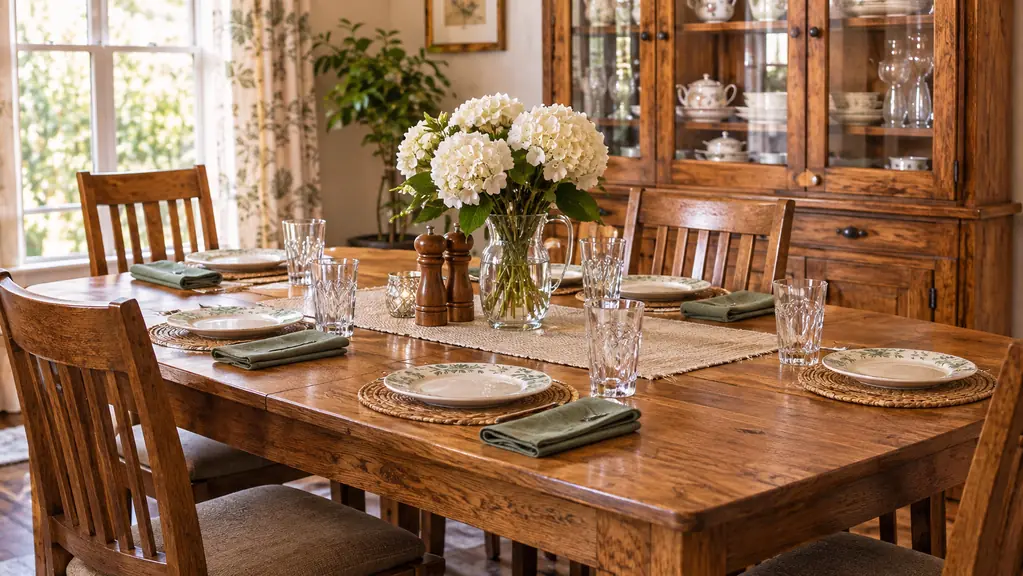
The first thing I notice when I set my oak table with the RUVANTI napkins is that the table looks finished before the food arrives. A paper napkin can be perfectly good, but it lies flat and thin beside a plate. The RUVANTI napkin has a soft, light, cozy hand, and the 18 by 18 inch square folds into a proper rectangle that stands up beside the fork. The set is listed at 1.1 pounds for all 12, so they are not so heavy that they drag a small plate, but they are substantial enough to feel like something you chose on purpose.
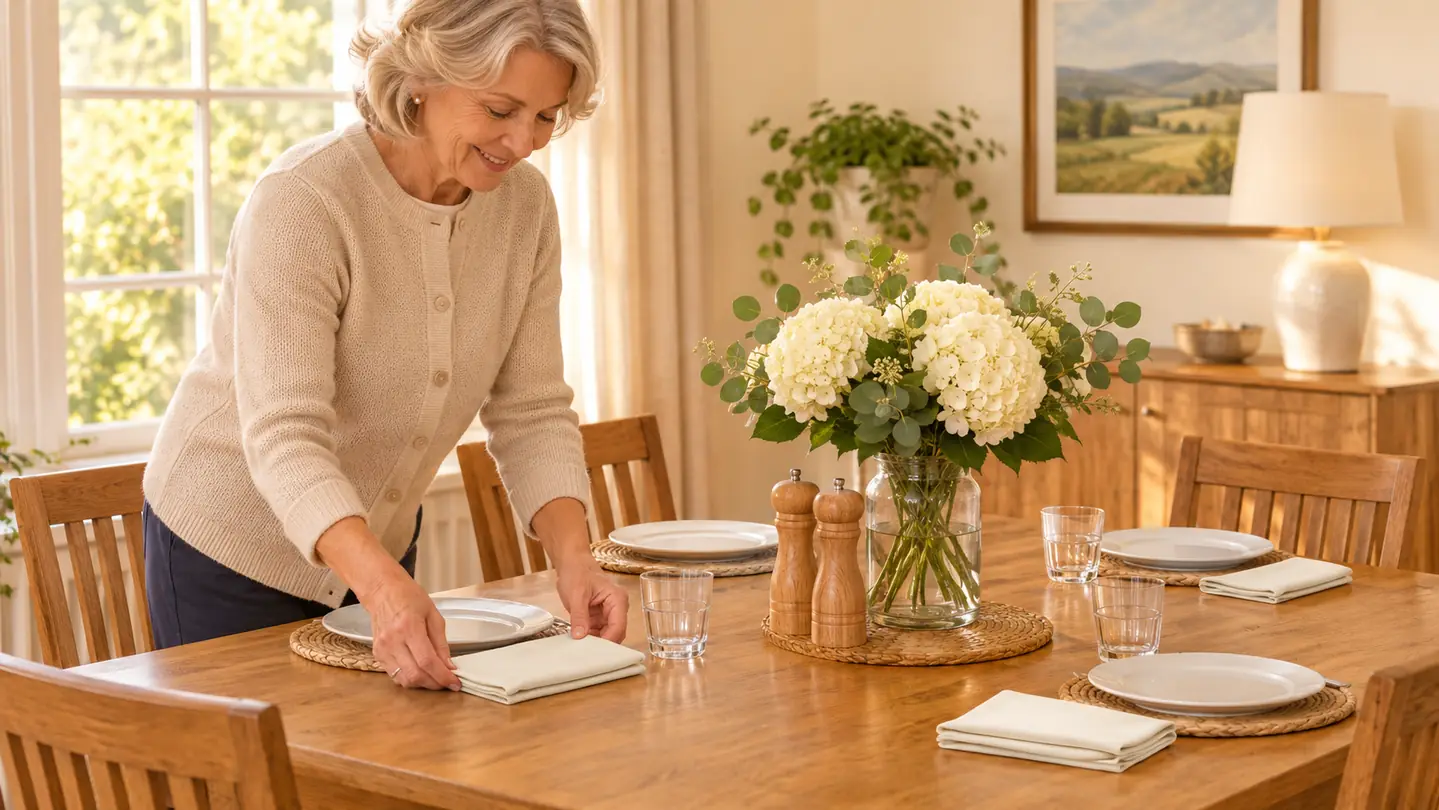
At Thanksgiving, when I set the dining table for eight and add the card table for the rest, the set of 12 does most of the work. I put cloth at every adult place and at the older grandchildren's places, and I keep a few paper napkins at the end where the youngest ones sit with ribs or a juicy slice of ham. That is not a knock against the cloth. It is just good table management. The first year I tried cloth at the card table, I set out all twelve and watched two of them get used as bibs before the blessing was finished. Now the cloth goes at the grown-up places and the two oldest grandchildren, and the little ones get paper. Nobody has ever complained about the arrangement. The RUVANTI napkins handle a lap spill from a glass of tea without turning to mush in my hand, which is more than I can say for the paper ones I keep in the kitchen drawer.
Where Paper Napkins Win
Paper wins on the weeknights when the wash is already behind and the family is eating in shifts. A paper napkin does not need to be sorted, washed, dried, and folded before the next meal. It does not care if someone uses it to wipe a child's face or mop up a puddle of milk. On a Tuesday when Walt is running late and the grandchildren are hungry, paper is the sensible choice. I am not too proud to use it.
Paper also wins for the messy foods that would make me wince at a cloth napkin. Ribs, corn on the cob, watermelon, and a slice of chocolate cake with icing that gets everywhere are paper napkin territory in my house. If a paper napkin gets ruined, it goes in the trash and the table is cleared. If a cloth napkin gets ruined, I am treating a stain and hoping I caught it in time. That trade is real. A household that hates laundry should not buy cloth napkins because a magazine told them to.
A table that feels cared for starts with the napkin in your lap
RUVANTI's set of 12 gives you a cloth napkin for every place at Sunday dinner, with a cotton-enrich hand that paper cannot match. Keep a pack of paper in the cupboard for the ribs and the grandchildren's art projects.
Amazon See the RUVANTI Napkins on Amazon →The Feel Difference, Meal After Meal
Paper napkins have a sound. They crackle when you unfold them, and they sit on the table like a temporary solution. Cloth napkins do not announce themselves. You put one in your lap and forget about it, which is the highest compliment I can pay a table linen. The RUVANTI napkins have a soft, light, cozy feel that does not scratch the face when a grandchild wipes his mouth, and they do not shred when someone uses one to blot a spill.
The feel difference matters most at the end of the meal, when people linger. A paper napkin is usually crumpled and finished by then. A cloth napkin is still in your lap, still doing its job, and the table still looks like a table instead of a craft project. My youngest granddaughter picked up a paper napkin at a church supper last spring and told me it felt like a paper towel, and she was exactly right. That is the part I cannot put a number on. It is also the reason I reach for cloth on Sunday and paper on a Tuesday.
The Cost Question, Without the Sales Talk
I taught home economics for enough years to know that cost is never just the amount you hand over at the store. Paper napkins are the smaller outlay at the start. You buy a pack, use it, and buy another. Cloth napkins are the larger outlay at the start because you are buying a set of 12 that you intend to keep. The useful question is not which one is cheaper on the day you bring it home. It is how many meals you actually host and how often you replace the paper.
I counted one year, out of curiosity and a little bit of stinginess. Between Sunday dinners from September through May and the two holidays, my table went through more than four hundred paper napkins over twelve months, and that was with me rationing them. The RUVANTI set covers the same meals out of one drawer with one extra load of laundry a week. If you set a family table most weeks, the cloth set has many chances to earn its place. My Sunday dinners alone would use a good many paper napkins over a year, and that does not count Thanksgiving, Christmas, and the church potluck. The RUVANTI set stays in the drawer between meals. I wash it with the dish towels and everyday linens, and it goes back into service. If you host twice a year and eat on the sofa the rest of the time, paper is the honest answer and I will not talk you out of it.
There is also the cost of your time, and I do not pretend that is zero. Cloth napkins mean laundry. They mean folding. They mean noticing on Saturday night that the drawer is empty because you forgot to run a load. In my house that load rides with the kitchen towels, so the extra work is smaller than it sounds, but it is not nothing. A person who is already stretched thin should count that cost honestly before buying a set. When I was teaching, I told my students to count the hidden work as part of the cost. A cloth napkin that never gets washed is no bargain.
What the RUVANTI Set Actually Is
The RUVANTI set is 12 square napkins, each 18 by 18 inches, made of Cotton Enrich fabric in a solid pattern. The listing calls them hotel-quality and multi-purpose for business and home use. I use them at home, at Sunday dinner, at holiday meals, and at the occasional church potluck where I am asked to bring the rolls and the napkins. The 12 count is the practical part. It lets me set my eight-seat table with both leaves in and still have four for the card table or the next wash cycle. The square shape is simple to fold, and the solid pattern does not fight with a patterned tablecloth or holiday china.
They are not the stiff, dressy napkins that feel like they belong in a hotel dining room and nowhere else. They have a light but cozy feel, and they soften with use. They come out of the wash a little relaxed, which I prefer to a napkin that feels like it has been starched for a photograph. The listing says they can be machine washed multiple times in normal water with light colors, and that matches my experience. I have washed mine repeatedly, and they have held up to grandchildren, gravy, and the occasional spilled glass of sweet tea. One napkin in my stack has been through more than a hundred washings now, and it still folds square and lies flat on the table. I have also learned the hard way that a red sauce stain wants cold water and a dab of dish soap before it goes anywhere near the machine, not after.
The real test of a cloth napkin is not the first holiday table. It is the ordinary Sunday when the drawer is full, the plates are hot, and everyone sits down at once.
How I Wash and Store Them
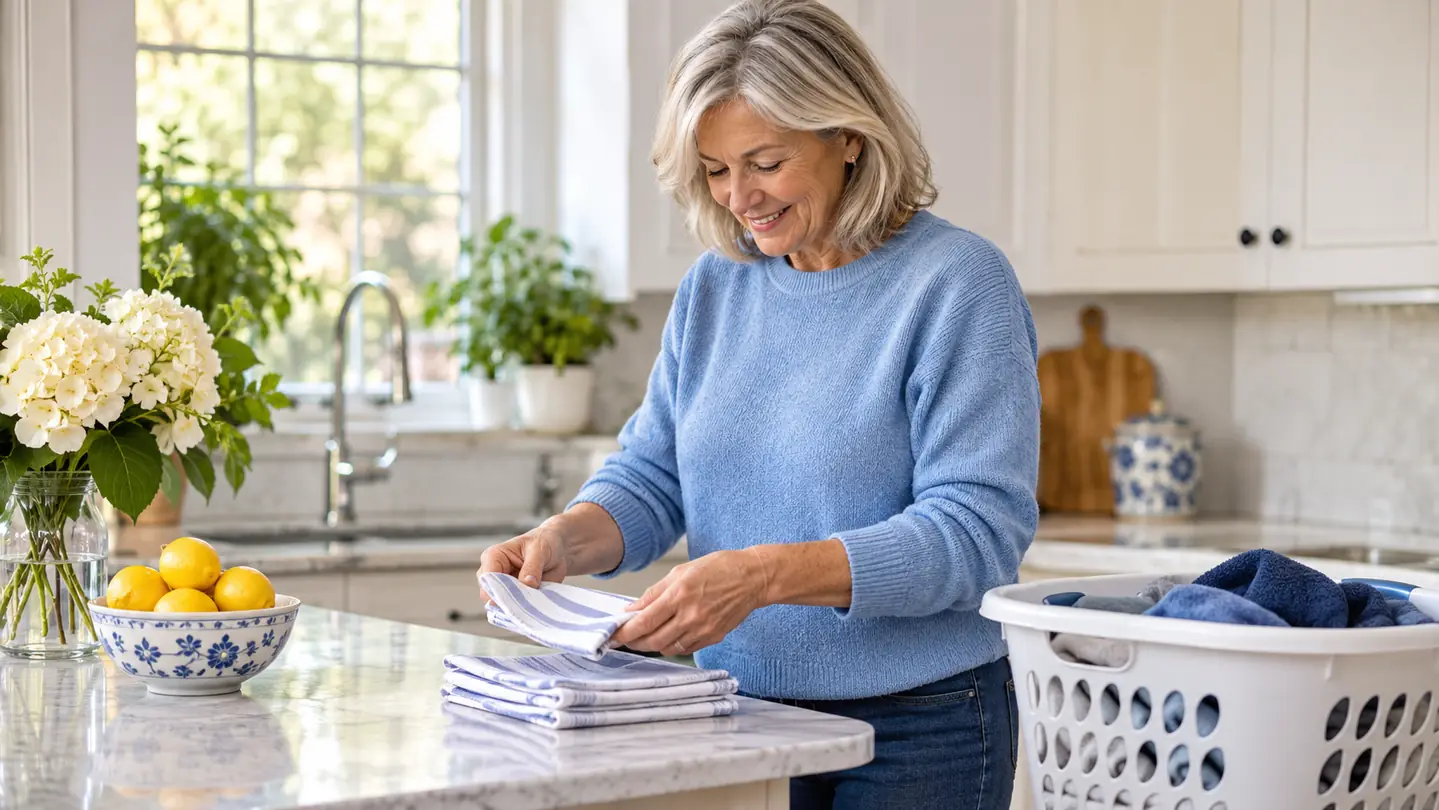
I shake the crumbs into the trash, check the corners for anything that needs a quick rinse, and toss the napkins in with the kitchen towels. The care note says normal water with light colors, so I keep them with the light load and I do not send them through with a new pair of jeans. I run that load on Thursday evening most weeks, which means the napkins are dry and folded before Saturday and I am not standing over the dryer at ten o'clock Sunday morning with company due at noon. That one habit did more for my table than any linen I ever bought. After they dry, I fold them into quarters and stack them in a basket in the dining room hutch. A warm iron makes them look sharper, but I do not iron every week. On an ordinary Sunday, a clean napkin folded in half is enough.
Storage matters more than people think. A stack of 12 in the hutch means I can set the table without hunting through the kitchen for a napkin that matches. I keep a small number of paper napkins in the same drawer for the messy nights. That way the cloth is the default for Sunday dinner and paper is the backup, not the other way around.
Who Should Buy Which
Buy the RUVANTI set if you host Sunday dinner, holidays, or family birthdays and you want the table to look as though someone cared. Buy it if you have a drawer or basket where a set of 12 can live, and if you are willing to wash and fold them. Buy it if you like the feel of cloth in your lap and you are tired of a paper napkin sliding off your knees. The 18 by 18 inch square is a good size for an adult place setting, and 12 is enough for a table of eight with a few to spare.
Buy paper napkins if you are feeding a crowd of teenagers, hosting a barbecue, or in a season when the laundry is already winning. Buy paper if you know yourself well enough to admit you will not fold cloth napkins on a Tuesday. If the thought of folding napkins makes you tired, believe that feeling and buy the paper. Many homes need both. I keep cloth for the planned meal and paper for the messy one, and I do not feel one bit guilty about it. The point is not to pass a test. The point is to set a table where people want to sit down.
Set the Sunday table with cloth, and keep the paper for the ribs
If your table is where family lands most weeks, the RUVANTI set of 12 is the practical place to start. It gives every place a proper napkin without a special shopping trip before every dinner.
Amazon See the RUVANTI Napkins on Amazon →