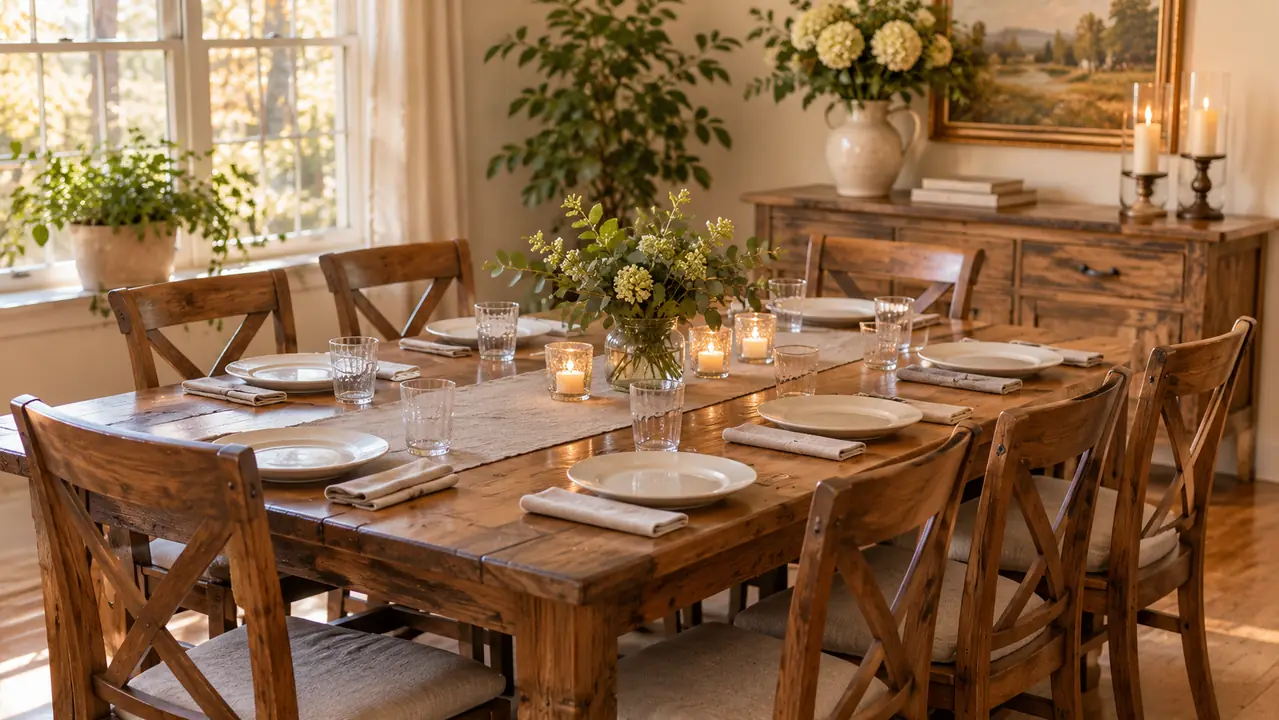
The first set of RUVANTI cloth napkins came into this house for a Thanksgiving table that had outgrown my good linens. Twelve people that year, a card table pushed against the end of the oak table, and a drawer full of damask napkins older than my marriage and thinner than I was willing to say out loud. I stood in the kitchen doing the arithmetic every hostess does the week before a holiday. How many napkins do I actually own, how many are fit to be seen, and how many will I be embarrassed by. The answer was eleven, and three of those had a spot I could not get out. So I ordered a set of twelve and told myself it was a stopgap.
Before these, I had tried the other routes. Paper napkins that shred under a fork and end up wadded by the plate before the blessing is finished. The heavy linen ones I inherited, which are beautiful and demand an ironing session I no longer have the patience for on a Tuesday. A cheaper cloth set from a big-box store that pilled on the second wash and left lint on every glass. What I wanted was plain. A napkin that could go in the machine after Sunday dinner, come out looking decent without a fight, and not make me wince when a grandchild wipes barbecue sauce on it. That is a shorter list than it sounds. I have now had these RUVANTI napkins in weekly rotation for a year and a half, through two Thanksgivings and two Christmases, and I can tell you exactly where they hold up and where they do not.
The Quick Verdict
A sturdy, machine-washable cotton napkin that handles a weekly family table without fuss. Not crisp hotel linen and not wrinkle-free, but after eighteen months all twelve are still in my rotation.
Amazon Check Today's Price →The napkins that came back for a second Thanksgiving
Set of twelve, 18 by 18 inches, cotton enrich, machine washable in normal water with the light-colored load. The set I keep in the drawer for Sunday dinner and holidays, not the one I save for company.
Amazon Check Today's Price on Amazon →How I've Used It
Our table seats eight with both leaves in, and Sunday dinner usually runs seven to nine people depending on which grandchildren are in town and whether my husband Walt has invited somebody from church. Twelve napkins is exactly right for that. Eight on the table, four in the wash or resting in the drawer as spares. The set rotates. I do not save them for company, which is the whole point of owning them. A napkin you are afraid to use is a napkin you should not have bought.
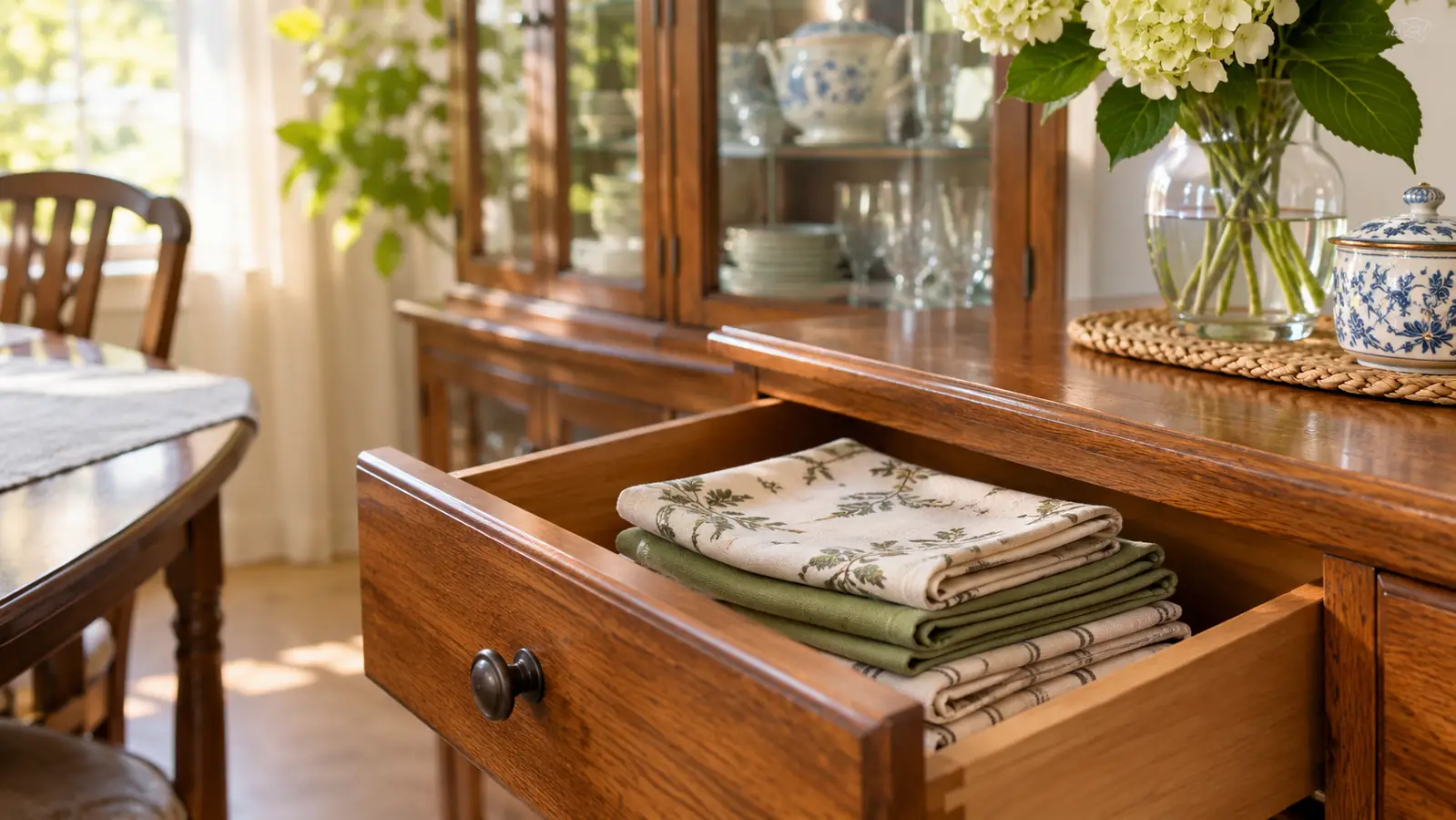
The real test came at Christmas, when we set fourteen places with the card table at the end. Fourteen people means every napkin in the house, these twelve plus two from the old drawer. Somebody's gravy landed on one before the plates were cleared. My youngest granddaughter used hers to blot a spill and then folded it back up like nothing had happened. Walt collected them all in the basket and ran them through that night, and by morning they were back in the drawer. That is the entire case for cloth over paper, and it is why these stayed.
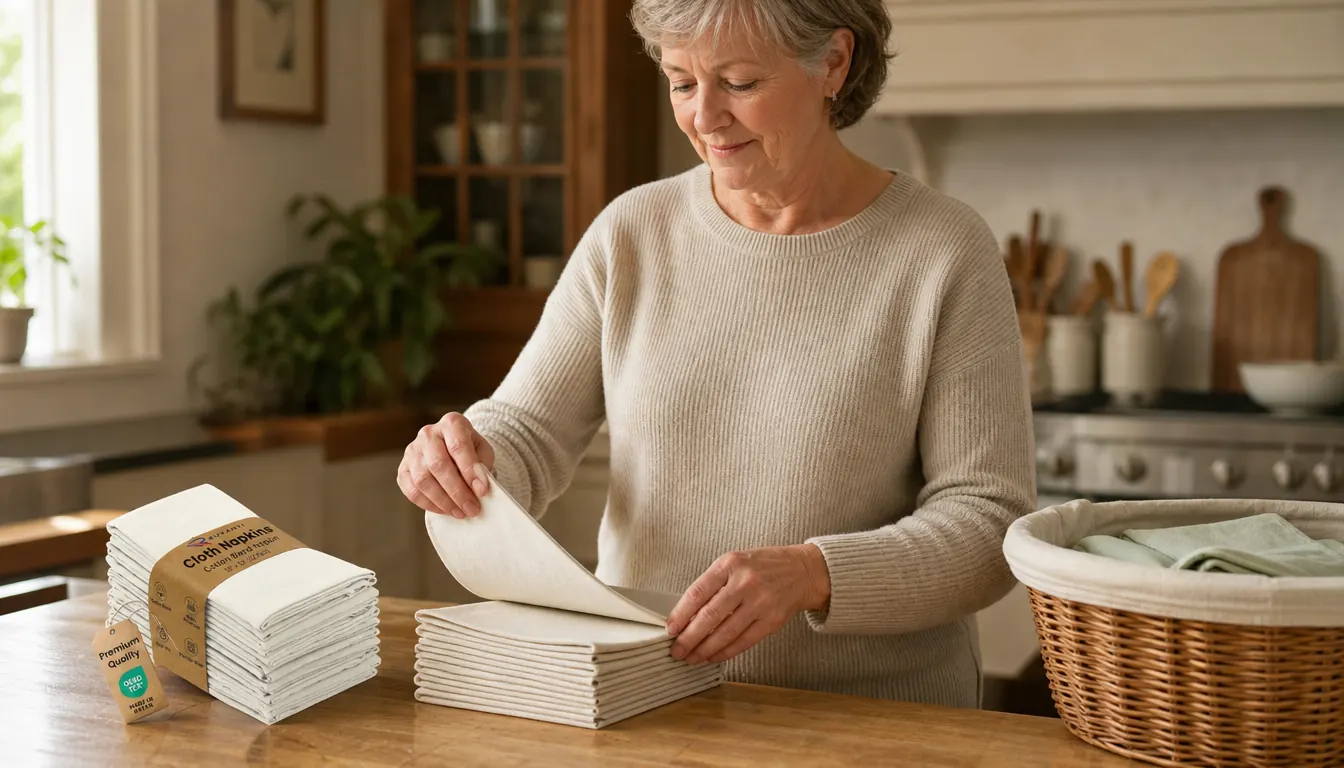
In eighteen months they have been through the machine, by my rough count, well over a hundred times. Not one has frayed at the edge, torn, or gone thin in the middle. The whole set weighs a little over a pound, which tells you something about the fabric. It is not the heavy damask my mother used, and it is not the flimsy stuff that comes bundled twenty to a package. It is a middle weight that absorbs and drapes and does not feel like a paper towel pretending to be cloth.
What Eighteen Months Actually Did to Them
Here is what I expected. I expected the first wash to shrink them into dish towels, and I expected the edges to start unraveling by spring. Neither happened. They came out of the dryer at 18 inches square, which is what the package promised, and they have stayed at 18 inches square. The edges are still clean on all twelve. I have held them up to the window one at a time, and there are no thin spots where a fork has gone through or where a stain was scrubbed too hard.
The feel has changed, and I want to be honest about that. New, they have a slight crispness to them. After a couple of dozen washes they soften into something closer to a well-worn shirt. That is not a flaw. It is what cotton does, and it is what makes them pleasant to put on a lap. But if you are buying cloth napkins hoping they will feel like a hotel dining room forever, understand that they will relax as they age. Mine have relaxed. I like them better for it.
Two of the twelve carry a faint shadow where a cranberry sauce stain sat too long on a busy night. That is on me, not the napkin. Ten are still what I would put out for guests without a second thought, and the two marked ones live in the kitchen drawer for Tuesday supper. I tell you that so you know what you are getting. This is a working napkin, not a piece that will look untouched after five years of real use.
Not one has frayed at the edge, torn, or gone thin in the middle, and that is after well over a hundred trips through the machine.
The Wrinkle Question, Answered Honestly
If you are looking for a cloth napkin that comes out of the dryer flat, this is not it. These wrinkle. Not catastrophically, not like a linen shirt forgotten in a hamper, but you will see fold lines and soft creases when you shake one out. I fold mine straight from the dryer while they are still warm, and that handles most of it. Folded warm and stacked under a little weight, they look perfectly presentable on the table by Sunday noon.
For Thanksgiving and Christmas I do press them. All twelve, on the ironing board, with a damp pressing cloth, maybe twenty minutes of work while the rolls are in the oven. Pressed, they look like a different napkin. Sharp corners, flat face, the kind of thing you fold into a triangle and stand up by the plate. Twenty minutes a couple of times a year feels like a fair trade to me. If it does not to you, know it going in.
What they do not need is starch. I tried starch on two of them the first year, because that is what my mother did, and it made them stiff in a way that was unpleasant against the mouth. Plain water and a hot iron is plenty. So the honest summary on wrinkles. Fold warm for everyday, press for holidays, skip the starch. And if ironing anything at all is a dealbreaker, buy something else and save yourself the aggravation.
How I Wash Them
The care is the reason these stayed in the rotation. They go in the machine on a normal cycle in regular water with the light-colored load, which is what RUVANTI says to do. No hand washing, no gentle cycle, no mesh bag. I do not separate them from the dish towels. I have never once treated them like something precious, and they have not punished me for it.
Two things I do that are worth passing along. First, no fabric softener. Softener coats cotton and cuts down how much it absorbs, and a napkin that pushes gravy around instead of soaking it up is not doing its job. Second, I pull them out of the dryer while they are still a touch damp and fold them right then. Ten minutes of attention at the end of the cycle saves an hour at the ironing board. That is home economics, not a life philosophy.
Walt does the dishes after Sunday dinner and he does the napkin load too. He has thrown them in with jeans, with bath towels, once with a red tablecloth, and nothing has run or bled. That last one made me nervous. It should not have.
The Gravy, the Cranberry and the Ring of Coffee
Stains are the whole ballgame with cloth napkins, so here is what I have learned with this set specifically. Gravy and butter come out with a normal wash and no pretreatment. Cranberry, barbecue sauce and anything with tomato in it needs a soak in cold water with a little dish soap before it goes in the machine, and if you catch it the same night it will come out clean. Coffee is the one that will test you. Blot it, soak it cold, wash it, and check it before it goes in the dryer, because heat sets whatever you missed.
The reason all of that matters is absorption. A cotton napkin takes a spill and holds it. That is the difference between cloth and paper at the table, and it is the difference between a napkin you can rinse and put back in a guest's lap within the same meal and one that goes in the trash. On a holiday with fourteen people, I have handed someone a fresh one from the drawer and dropped the soaked one in the sink to deal with later. You cannot do that with paper, and it is not pleasant with a synthetic cloth that beads liquid on the surface.
Where They Fall Short
Three honest complaints. First, 18 inches square is a modest dinner napkin. It covers a lap fine, but if you are used to the big oversize napkins at a steakhouse, these will feel small in the hand. Second, they are solid and plain, which I happen to want, but if your table wants a pattern or a monogram these will not give it to you. Third, the wrinkle issue is real and it does not go away. You will either make peace with folding them warm or you will iron.
There is a fourth thing, smaller. Twelve is the right number for my table and it may not be for yours. If you routinely set sixteen, you will want two sets, and I would buy them together so they match each other. That is the kind of detail you only think about after you have already done it the other way.
What I Liked
- Machine washable in normal water with the light-colored load, no hand washing and no mesh bag
- Set of twelve at 18 by 18 inches, enough for a table of eight with spares in the drawer
- Edges held up over eighteen months and more than a hundred washes with no fraying
- Absorbs spills instead of pushing them around, which is the entire point of cloth
- Soften with use into a comfortable everyday napkin rather than staying stiff
Where It Falls Short
- They wrinkle out of the dryer and need a warm fold or a press to look sharp
- 18 inches square is on the small side if you like an oversize lap napkin
- Solid and plain, with no pattern or monogram option in this set
- Cranberry and coffee need a cold soak the same night or they will set
Who This Is For
This is for the household that eats at a table most nights and wants a napkin it does not have to think about. If you host Sunday dinner, if you set a table for eight or ten, if you have grandchildren who will absolutely wipe their hands on something, these are the napkins for you. They are also for the person moving off paper for the first time and not ready to spend an hour a week maintaining linen. The care is genuinely ordinary, you get twelve of them in one go, and that matches the size of a normal family table.
It is also for the hostess who wants a uniform table. Twelve identical napkins folded the same way look better than twelve mismatched ones, and I say that as someone who loved her mother's mismatched collection. There is a tidiness to a matched set that reads as care, and care is most of what hospitality is.
Who Should Skip It
Skip these if you want a napkin that comes out of the dryer table-ready. It will not, and you will be irritated every single week. Skip them if you set a formal table where heavy pressed damask is the standard, because these are a working weight and they will look underdressed next to your grandmother's china. Skip them if you need a pattern or a monogram to finish the look. And skip them if you have a household rule against ironing anything, because twice a year you are going to want to press these and no amount of wishing will change that.
Twelve napkins, one drawer, every Sunday dinner
If your table seats eight and your drawer holds a sad collection of paper and mismatched cloth, this is the simplest fix I know. Fold them warm, soak the cranberry the same night, and stop saving the good things for guests.
Amazon Check Today's Price on Amazon →