

Twelve people around my oak table on Thanksgiving, and not one of them eating off my mother's china. That surprised me more than anything else that year. I had bought a Corelle Vitrelle 18-piece set the spring before, mostly because I was tired of hauling the good dishes out of the glass-front hutch for a Tuesday meatloaf, and by the holidays the Corelle had quietly taken over both jobs, the Sunday dinners and the once-a-year ones. I have now lived with the set long enough to give you a straight account instead of a first-week impression.
I am 64, a retired home economics teacher, and I live in a brick ranch house outside Bentonville, Arkansas, with my husband Walt, who does the dishes after Sunday dinner and has opinions about how they stack. Sunday dinner happens here most weeks. Thanksgiving and Christmas happen here every year, usually 12 to 14 people once the card table goes up at the end of the dining room. I taught middle schoolers to set a table, fork on the left and knife blade facing the plate, for 31 years, so I am not easily impressed by a plate. What follows is a plain account of a year with this set: what it does well, where it fell short, and who I would and would not hand it to.
The Quick Verdict
The plates I reach for first and worry about least. Light enough for a grandchild to carry, tough enough for a stone counter, and plain enough that nobody at my table has ever commented on them.
Amazon Check Today's Price →Eighteen Pieces That Handle Sunday Supper and the Holiday Table
Six dinner plates, six appetizer plates, six bowls. Nine and a third pounds for the whole box, which is why I can carry the set one-handed from the hutch to the table.
Amazon Check Today's Price on Amazon →How I've Used It
The box came in March. Inside were six dinner plates, six appetizer plates, and six soup and cereal bowls, 18 pieces and 9.3 pounds for the whole set. Walt carried it in from the porch with one arm and set it on the kitchen counter, and that tells you most of what you need to know about the weight before you ever pick up a plate. The rims are round and plain, the finish is high-glossy, and there is no pattern to speak of, which is exactly what I wanted and exactly what some people will not.
One more thing about the weight, because it is the reason I bought them. The full set is 9.3 pounds. My old stoneware, a service for eight, was roughly twice that, and I know because I weighed both on the kitchen scale out of curiosity one afternoon. Carrying a stack of eight dinner plates from the hutch to the table is a two-hand job with stoneware. With these it is one hand, and at 64 that is not a small consideration. It is the whole consideration, most days.
The first week I used them for everything, deliberately, the way I would have tested a new piece of equipment in the classroom. Toast and eggs in the morning. A sandwich at noon. Sunday dinner for eight with both leaves in the table. Into the dishwasher after every meal. Into the microwave for leftovers. Into a 350 degree oven for ten minutes to warm plates before the food came out, which the manufacturer allows. Nothing warped, nothing clouded, and nothing came out of the wash looking tired after a week of that.
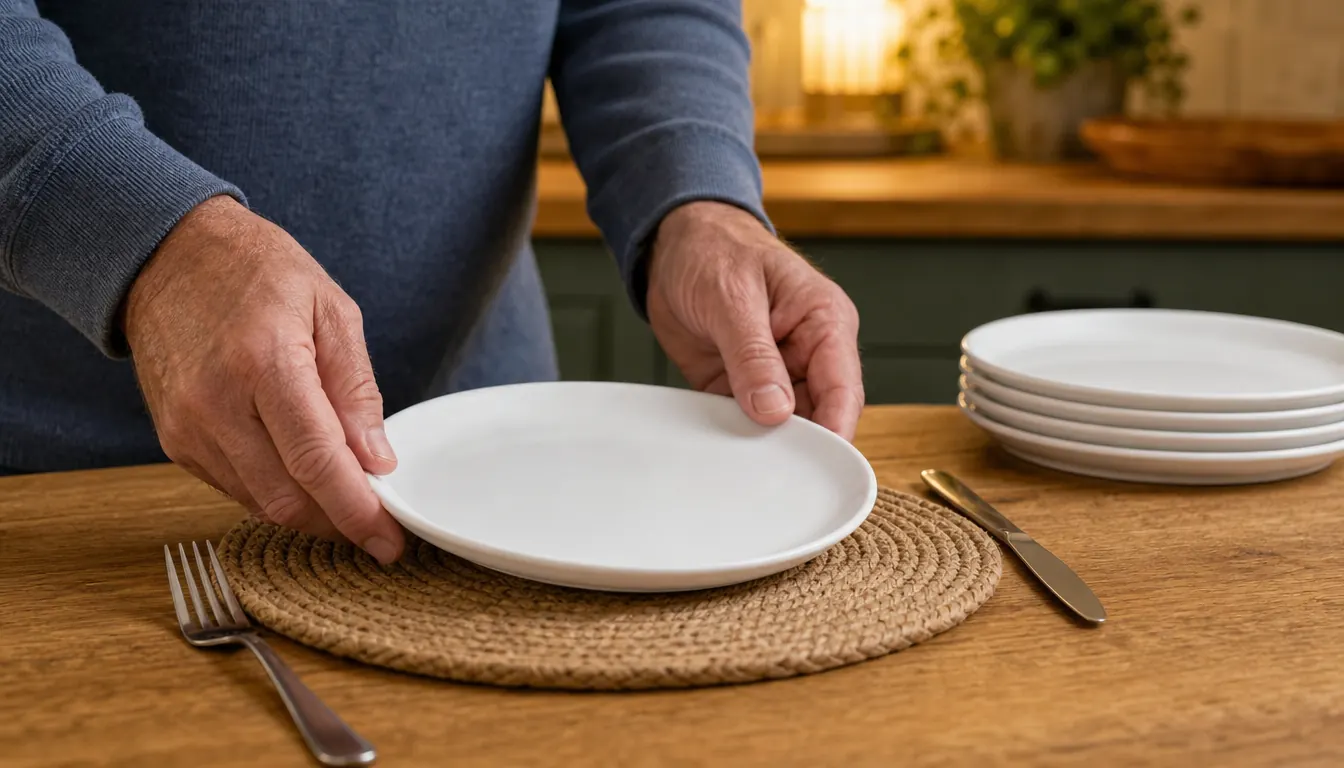
The grandchildren are the real test. My youngest granddaughter is at the age where she wants to carry things, and a stack of four dinner plates in her hands used to make me hold my breath. With this set I let her carry them. They are lightweight, the edges are smooth, and if she sets one down hard on the oak I do not wince the way I used to.
What the Triple Layer Glass Actually Means
Corelle makes these from three layers of glass bonded together, which is how they end up thin and light and still resist chipping the way a heavy stoneware plate does. I have heard that described as a selling point so many times that it stopped meaning anything to me, so here is what it means in an actual kitchen. A plate that weighs half what my old stoneware weighed gets carried by a nine year old without ceremony. A smooth round rim does not catch a sponge or hold onto a dried bit of gravy. And a plate that resists chipping does not develop the rough edge that collects dishwater and turns gray after two years, which is precisely what happened to the set these replaced.
The honest side of that construction is temperature. The maker says sudden temperature changes may cause a piece to break or shatter, and I believe them. I do not take a plate straight from the freezer into a hot oven, and I do not pour boiling water into a cold bowl. Treat them like glass, because that is what they are, and they behave. Treat them like a plastic picnic plate and you will lose one, and you will decide it was the plate's fault.
What they are not is plastic. The set is plastic free, which matters more to me at 64 than it did at 40. I have eaten off melamine at church picnics and I have eaten off these at my own table, and there is a difference in how food tastes and how a fork sounds against the surface that I cannot explain well but can hear from across the room.
A Year of Sunday Dinners
We eat at that table most Sundays. Call it 40 Sundays, three meals a day for two people most weeks, plus four grandchildren and their after-school snacks, and these plates have been through the dishwasher well over 300 times. The high-gloss finish has not dulled. The rims have not gone rough. I have lost exactly one piece in twelve months, and I will tell you about it rather than pretend it did not happen.
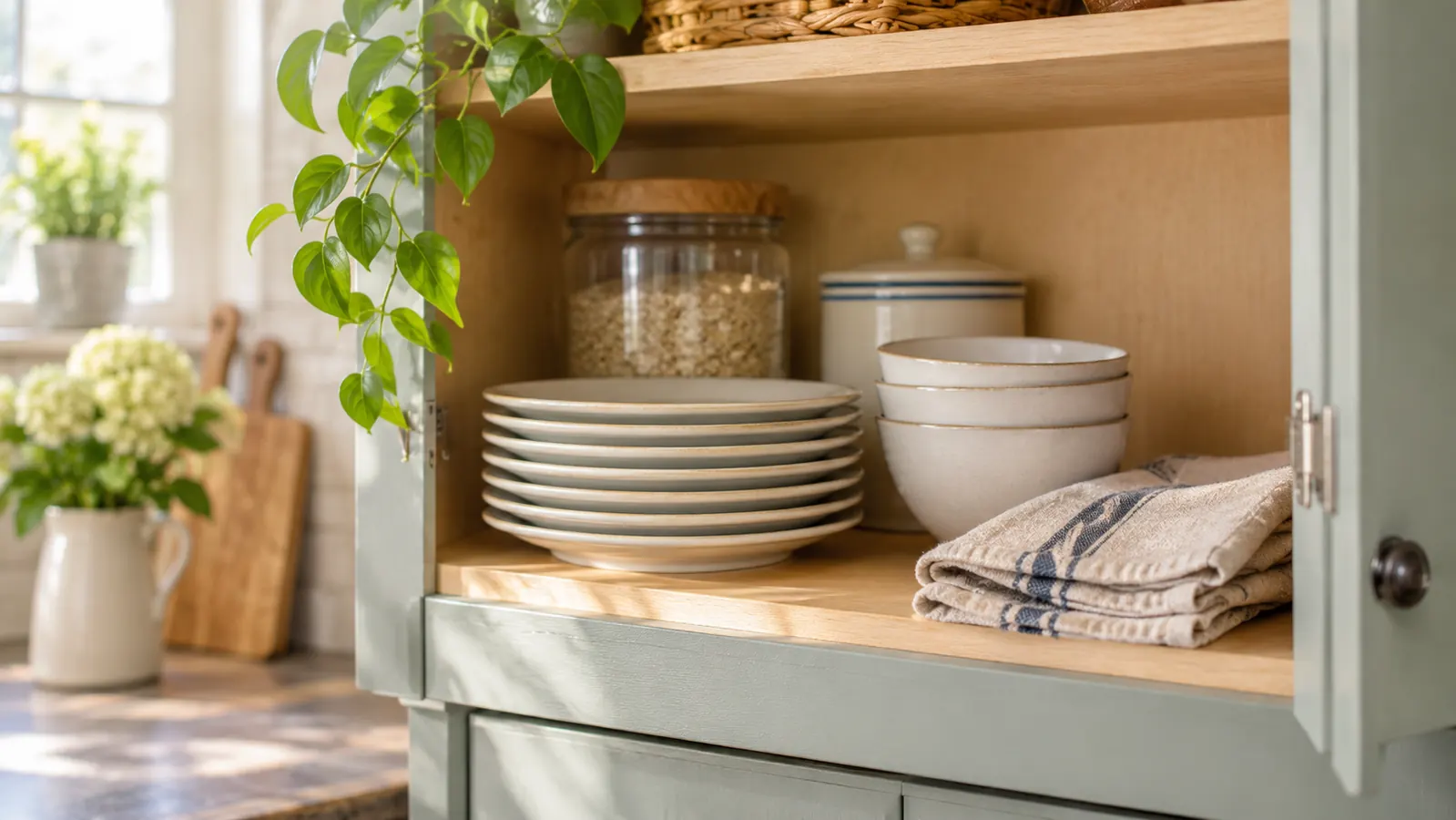
Stacking is the quiet advantage, and it is the one nobody mentions. The dinner plates stack almost flat, the bowls nest inside one another, and the whole service for six takes up less shelf space than my old set for four did. I keep my mother's china in the glass-front hutch and I do not have another inch of it to give over to everyday dishes. If your kitchen is small, that is the paragraph worth reading twice.
The break came in August. A soup bowl went off the edge of the counter onto the tile floor and broke into three clean pieces. A three year limited warranty does not cover a fall onto tile and I did not try to make it. I am telling you because a review that claims nothing ever broke is a review written by somebody who never actually used the thing they are describing.
Walt's verdict, since he is the one who washes them: he likes them, and his reason is not the one I expected. He says they take up less room in the drying rack and that they come out of the dishwasher nearly dry because they are thin and there is nowhere for the water to sit. He has never once said that about a stoneware plate in 38 years of marriage.
The Holiday Test: Twelve at the Table
Thanksgiving is the day these earn their keep. Twelve to 14 people, the oak table with both leaves in, a card table at the end of the room for the younger cousins, and a menu that produces a great many dirty plates in a short window. I warmed plates in the oven at 350 before the turkey came out. I put the bowls in the microwave for the soup course. Every last piece went through the dishwasher in two loads and came out in time for pie.
The lightness matters more on a holiday than on a Tuesday. Setting 14 places means carrying stacks from the kitchen to the dining room and back again, twice, and your wrists notice. My mother's china is heavier and I love it, but I set 14 places with it once and spent the rest of that evening with a heating pad across my hands. I am not dressing that up for effect.
Christmas runs much the same way, with one difference I did not expect to care about. I set the table the night before now, which I never did with china, because these can sit out on a linen cloth overnight without my worrying about a chip from a serving spoon or an elbow. That sounds like a small thing. It is the difference between a calm holiday morning and one that starts with me lecturing somebody.
The one thing I add for holidays is serving pieces. This is a service for six, plain and simple: plates and bowls, no platters, no vegetable bowl, no gravy boat. I use my own serving dishes and always have, and the plain surface of these makes a platter of my grandmother's look like it belongs there rather than fought with it. If you are starting from nothing, know going in that 18 pieces of plates and bowls will set a lovely table and will not put the mashed potatoes anywhere.
What I Don't Love
The plainness is a tradeoff, not a virtue, and I will not pretend otherwise. Some people want a plate with a pattern, a band at the rim, something that announces this dinner was planned. These do not announce anything. They look like what they are, good dishware for people who are not trying to make a statement with dishware. Corelle sells this shape in other patterns and the pieces layer with what you already own, so the plainness is a starting point rather than a life sentence. But the box you open will be plain.
The bowls run small. They are soup and cereal bowls, and they do justice to chili, oatmeal and tomato soup, but if you serve a bowl of stew as the meal they come up to the rim. I use a larger bowl of my own for that, and I would rather tell you now than have you find out on a cold night with company at the table.
They get hot in the microwave faster than stoneware does, because they are thin. That is physics and not a defect, but you will want a dish towel, and you will want to warn a guest. And I would not hand a stack of them to a toddler on a tile floor, for the reason August taught me.
What I Liked
- Light enough that a child can carry a stack across the kitchen
- Resists chipping in daily use, a full year in
- Stacks flat and nests, which saves real shelf space
- Dishwasher safe, microwave safe, oven safe to 350 F
- Plastic free
- 18 pieces is a complete service for six
Where It Falls Short
- One bowl broke when it fell on tile
- No serving pieces in the set, only plates and bowls
- Plain finish sits oddly beside china
- Bowls are small for a main-course soup
- Sudden temperature changes can shatter a piece
Three hundred trips through the dishwasher, forty Sunday dinners, two holidays, and one bowl lost to a tile floor.
Who This Is For
The hostess who sets a table most weeks and does not want to think about the dishes afterward. Families with children old enough to help, because these are plates you can let a child carry across a kitchen without following behind with your hands out. Anyone downsizing from heavy stoneware who is tired of lifting a stack of eight plates out of a low cabinet. Anyone feeding a crowd at the holidays and then facing two loads of washing up at ten at night. And anyone who has been setting the same four plates for a decade and wants a service for six that fits in the cabinet they already have.
I would also say this to a young family starting out with nothing. Buy the plain set, use it hard, and put your money into the serving pieces and the tablecloth, because those are the things people remember about your table. Nobody has ever left my house talking about the plates. They talk about the pie and whether there was enough of it.
Who Should Skip It
If you love china, this will not satisfy you and it is not meant to. If you want a pattern that carries a holiday table by itself, buy a pattern, or buy this and layer it with what you already own. If your people are genuinely hard on dishes and you need something you can drop on a driveway, you want melamine, and these are not melamine. And if you are shopping for a full set with platters, a gravy boat and a covered vegetable dish, this is a service for six plates and bowls, and you will be shopping again next week.
The Set I Would Buy Again Tomorrow
Six dinner plates, six appetizer plates, six bowls, 9.3 pounds, dishwasher and microwave safe. A year in, it is still the set I reach for first and the one I worry about least.
Amazon Check Today's Price on Amazon →