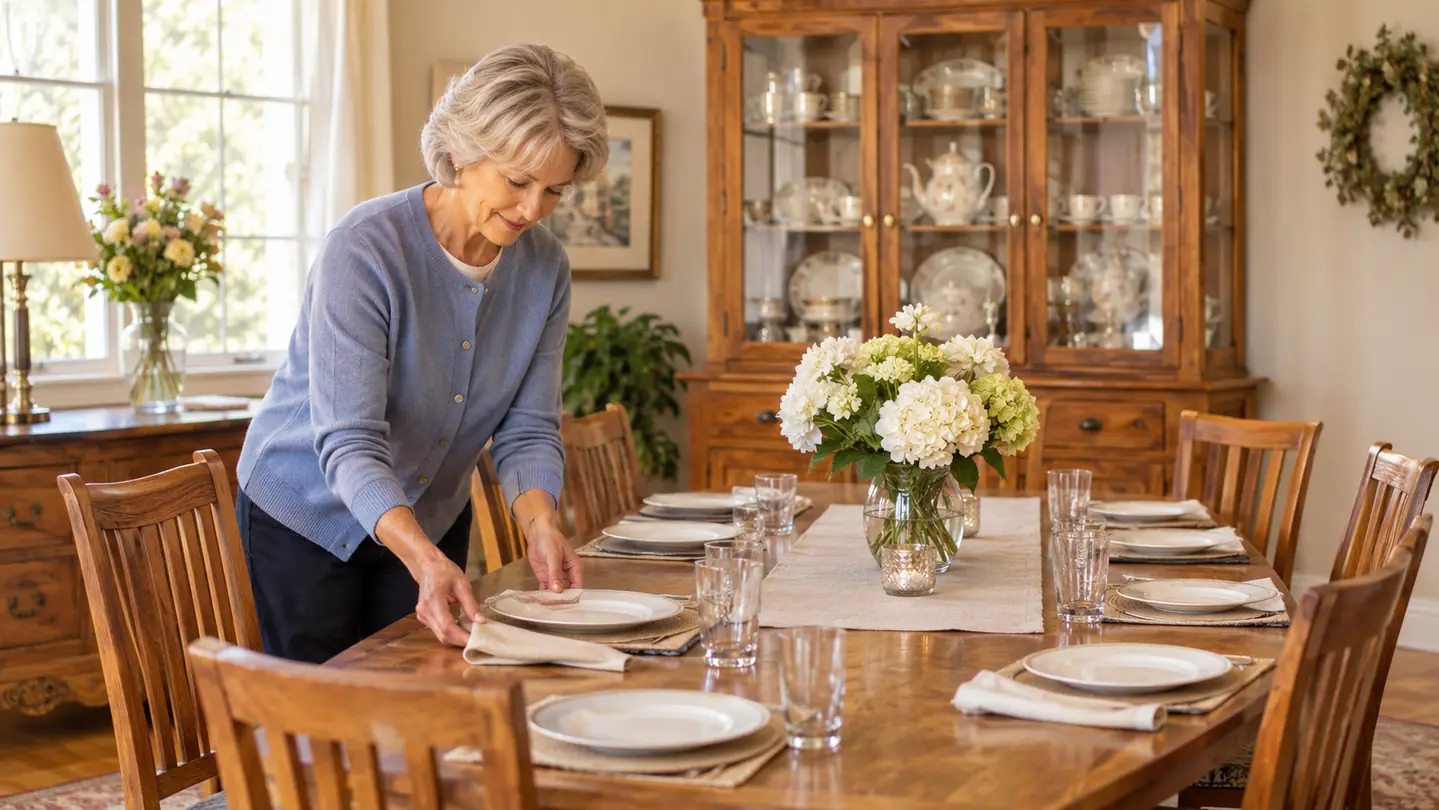
For twenty-nine years I taught home economics in a cinderblock classroom outside Bentonville, and for most of those years my own Sunday table was set with paper. I say that plainly because I am the one who handed out the napkins every week, and I defended the habit longer than it deserved.
Two years ago at Thanksgiving we had thirteen at the table, with the card table butted up against the end of the oak one to seat the grandchildren. Walt had finished carving, I had passed the potatoes twice, and halfway through the meal a paper napkin slid off my youngest granddaughter's lap and landed near the floor by the gravy boat. She picked it up, held it out at arm's length, and asked me why the restaurant in Rogers gave people cloth ones and we gave them these. I did not have a good answer. I had a convenient one, which is not the same thing.
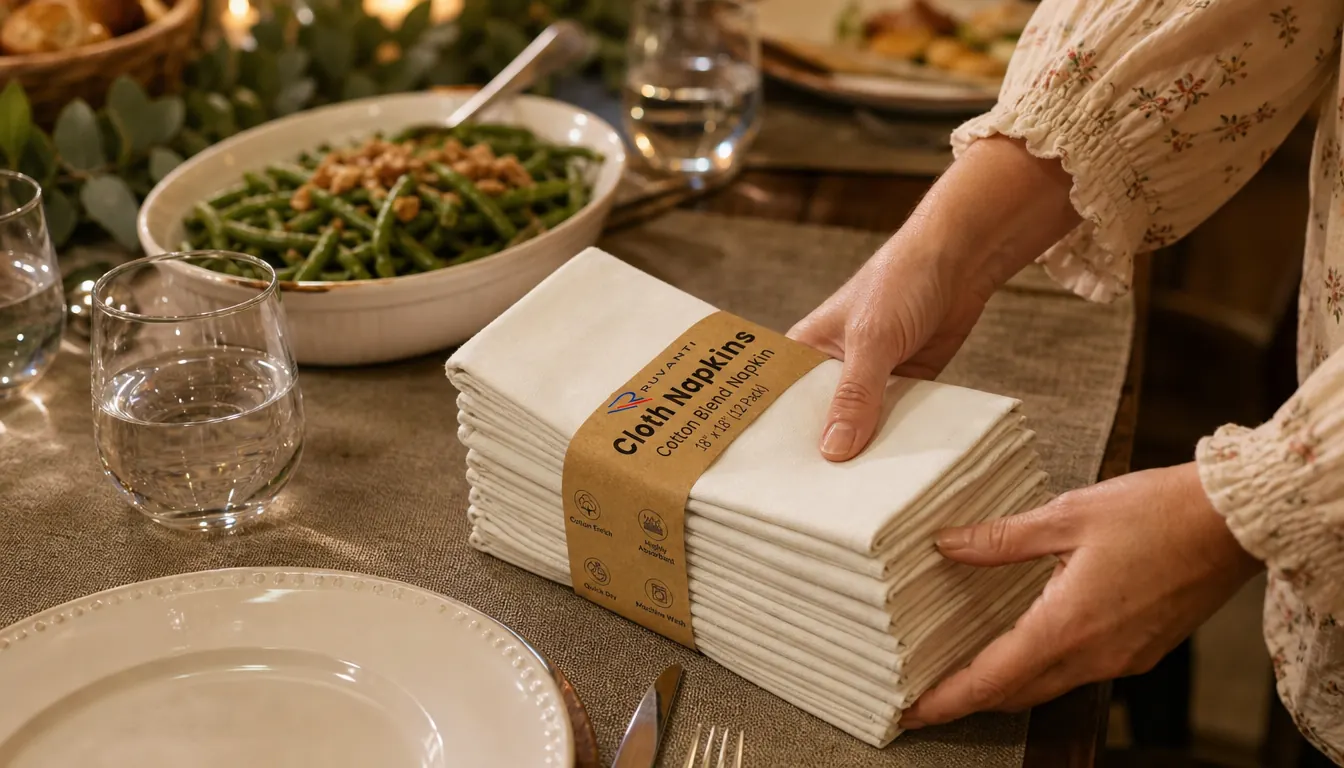
That week I sat down with a cup of coffee and did what a home ec teacher does. I compared. What arrived was a set of twelve RUVANTI cloth napkins, 18 inches square, a cotton enrich fabric, about a pound for the whole bundle. I bought them with my own money and nobody has asked me to say a word about them since, so take this as a report from one table and not a sales pitch.
The first Sunday we used the RUVANTI napkins, Walt noticed before he noticed the roast. He is a man who does the dishes afterward and says little during, and he held one up and said it felt like the ones at the steakhouse over in Springdale. The grandchildren noticed too, the way children notice anything that changes a routine. My youngest asked whether she was allowed to wipe her mouth on it. I told her that was the entire purpose.
What I did not expect was how much calmer the table felt. A paper napkin is a thing you use and throw away, and children treat it that way. A cloth napkin is a thing you are trusted with. In two years I have watched four grandchildren go from crumpling their napkins into balls to folding them back beside their plates when they finish, and I never once gave a lesson on it. They picked it up from the table itself.
A paper napkin is a thing you use and throw away. A cloth napkin is a thing you are trusted with.
The twelve napkins that took the paper list off my refrigerator
One set of twelve, 18 inches square, cotton enrich fabric. It covers Sunday dinner and the holiday table both, and it goes in with the light-colored wash on Sunday night.
Amazon Check Today's Price on Amazon →Here is the practical part, because practical is what I am good at. Twelve napkins is the right number for this house. Sunday dinner is eight with both leaves in the oak table and six with them out, and the holidays run twelve to fourteen once the card table goes up at the end. The RUVANTI set covers the holiday table exactly, and on the years we stretch to fourteen the two oldest from the everyday drawer come out to fill in. There is always a clean set in the drawer while the other one is in the wash, and that is the whole system.
They go through the machine on a normal cycle with the light-colored load, which is what the maker recommends. I start them Sunday night after Walt finishes the dishes and they are folded in the drawer by Monday afternoon. Two years in, the ones we use every week have been through well over a hundred washings. The fabric has softened without thinning, and I have not had a corner let go yet.
Eighteen inches square is bigger than it sounds. It covers a lap. That seems like a small thing until you have watched a grown man in a good church shirt try to eat a plate of barbecue with a cocktail napkin. These are the size napkins my mother used, and I believe that is the point. Somewhere along the way napkins got smaller and the meals got messier. I have also used them to line the bread basket and to cover the rolls while the roast rested, and they have done both jobs without complaint.
Now the honest part. They wrinkle. Cotton enrich fabric does, and I am not going to pretend otherwise. I press mine with a warm iron on Sunday morning while the rolls are rising, and on a busy week I have been known to fold them straight from the dryer and let the creases fall where they may. If you need a napkin that looks like it came out of a store window with no effort from you, these will ask a few minutes of your morning.
The other honest part is that guests do not always know what to do with a cloth napkin. My brother-in-law put his in his iced tea glass the first year, thinking it was a coaster. I have learned to stack them near the end of the table so people can help themselves, and I keep a damp cloth in the kitchen for anybody who needs it. Napkins are a small piece of hospitality, and hospitality means making people comfortable, not correct.
What I'd Tell You If We Were Sitting at My Kitchen Table
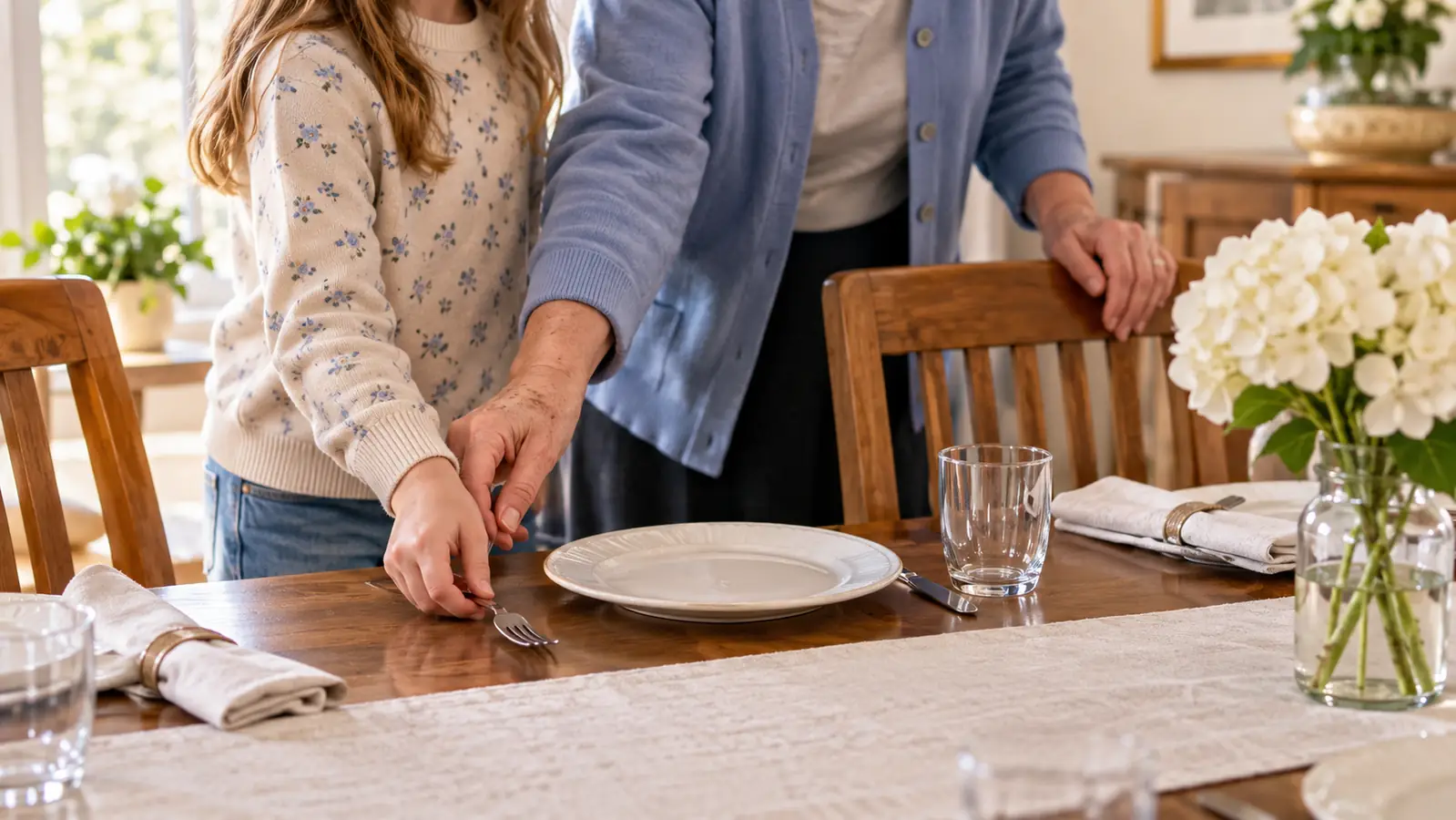
If you are still handing out paper on Sunday, I am not going to scold you. I did it for years and I had my reasons. But I would tell you what I wish someone had told me. The difference between a paper table and a cloth table is not elegance, and it is not the fuss you are picturing. It is the difference between a meal you get through and a meal you sit inside of for an hour. My grandchildren set this table now, fork on the left, knife blade facing the plate, and they set it with these twelve RUVANTI napkins. When my youngest folds hers and lays it back down at the end of dinner, she is telling me something about how she thinks of the table and the people at it. I would rather spend twenty minutes with an iron on a Sunday morning than lose that, and I suspect you would too.
Start with the twelve. The rest of the table follows.
18 inches square, cotton enrich, machine washable with your light-colored load. The paper list comes off the refrigerator the first Sunday, and nobody asks for it back.
Amazon See the RUVANTI Napkin Set on Amazon →