
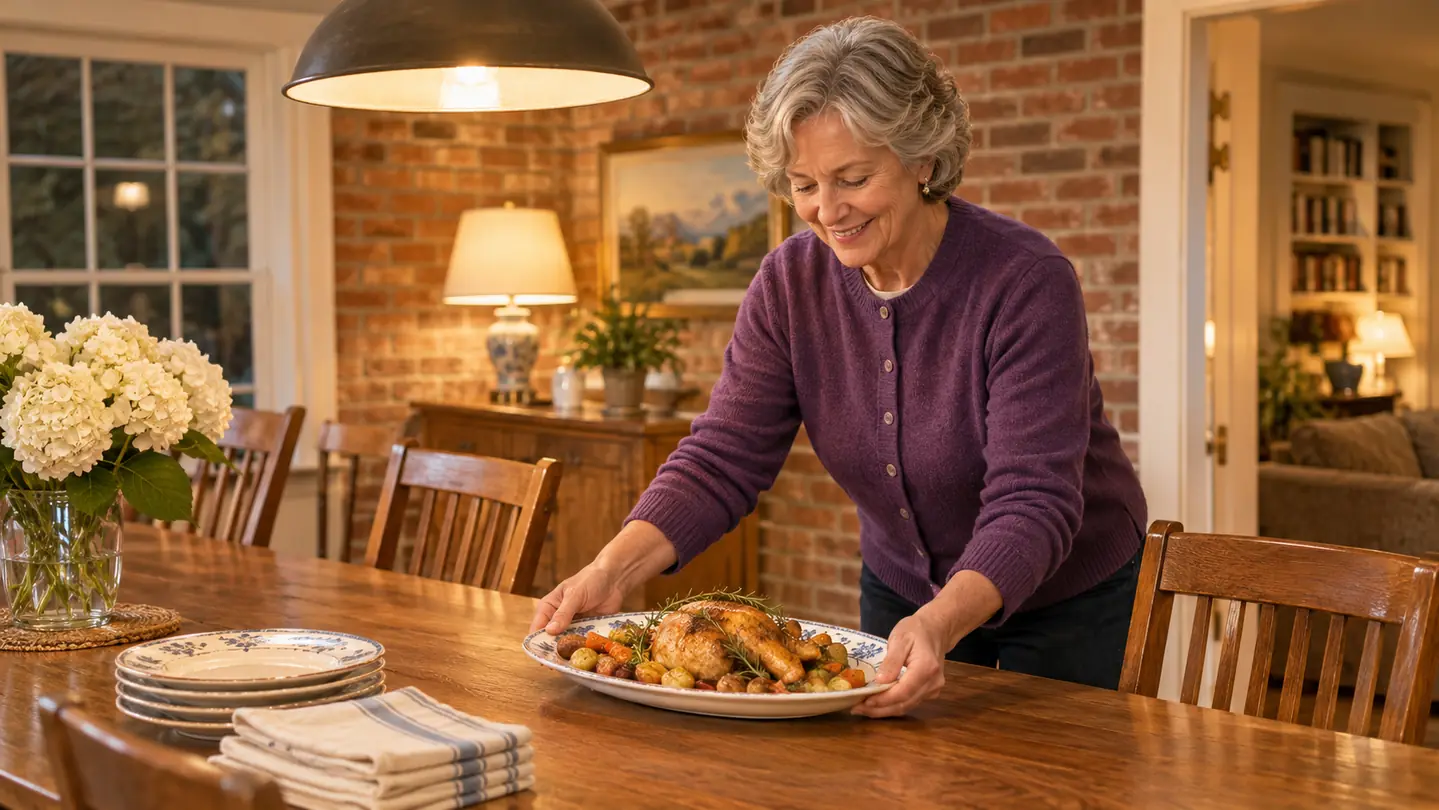
Every hostess I know has one moment she dreads, and it is not the turkey. It is the twenty minutes before everyone sits down, when the food is ready, the family is hungry, and the kitchen counter is covered with six dishes that do not match and will not fit on the table. I taught home economics for twenty-nine years before I retired. I have hosted Sunday dinner for my family most weeks since, and I have served Thanksgiving and Christmas for twelve to fourteen people in a dining room that seats eight, with a card table added at the end. What saves that meal is not a fancy buffet. It is a working one.
The change that made the biggest difference in my own house was the platters. I use the MORA ceramic serving bowls, the set of two oval platters, a 13.5 inch and an 11.8 inch, holding 55 and 35 ounces. They are stoneware, made with what MORA calls Paladin Clay, and the glaze is a crystallized glossy finish the company says is built to resist scratches. Two facts matter more to me than all the rest. They are oven safe, and they go in the dishwasher. A platter that has to be hand washed after fourteen people have eaten stays in the hutch, and a platter in the hutch is no help to anybody.
Two platters that carry most of a meal
The MORA set gives you a 13.5 inch oval for the roast and an 11.8 inch oval for everything else. Oven safe, dishwasher safe, stoneware that will outlast the card table.
Amazon Check today's price on Amazon →Five Steps to a Buffet Line That Actually Moves
Step 1: Count your people and map the table before you cook a thing
Start with a number and a pencil. How many people are actually coming, and how many of them are children who will take two bites and be done? Write that number at the top of your grocery list, because it decides everything else on the page. Then walk into the dining room and look at the table the way a stranger would. In my dining room that means the oak table with both leaves in, which seats eight, and the card table at the end that adds six more at the holidays. Eight people or fourteen, the line works the same way. What changes is how much food sits out at one time.
Next, decide where the line starts. It should not start at the head of the table, because that is where my husband Walt sits, and he will be in the way. Put the stack of plates at the end nearest the kitchen door and work the dishes down the far side toward the window. Guests move in one direction, fill their plates, and sit down. Nobody doubles back, nobody reaches across a cousin, and you are not carving while people squeeze past you with a full plate in their hands.
One more thing before you cook anything. Count your serving pieces the way you counted your guests. If you have eleven dishes and four platters, three of those dishes are going on the counter, and the counter is where food goes to get cold. This is the point where most hostesses give up and buy more, and it is also the point where two good oval platters do more work than eight mismatched bowls. I learned that the hard way, at a Christmas dinner where the green beans never made it to the table at all.
Step 2: Put the food in pieces that fit the table, the oven, and the dishwasher
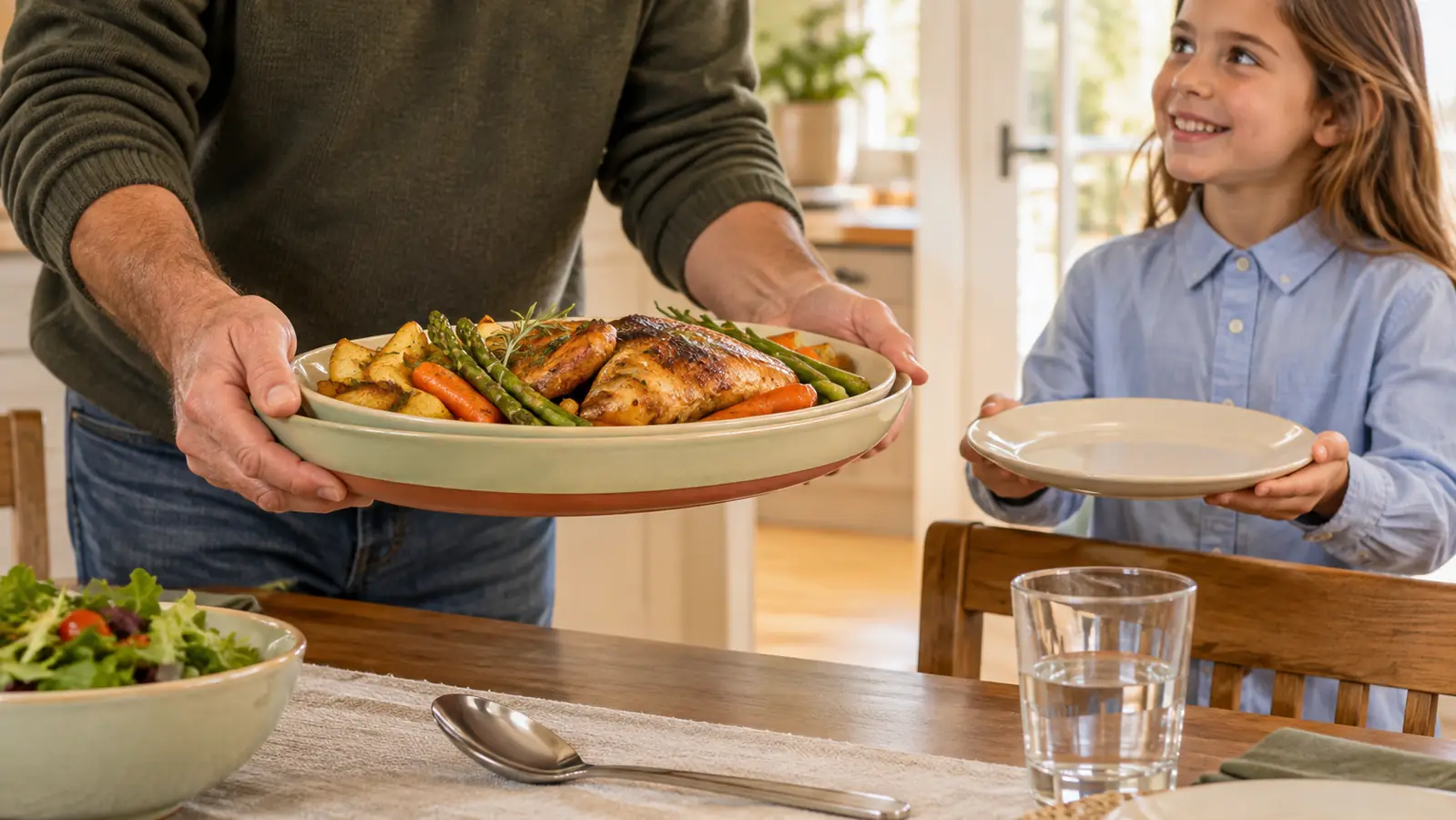
An oval platter beats a round bowl on a buffet, and it is not a matter of taste. A round bowl makes people dig, and digging means the last four guests get the bottom of the dish. An oval spreads the same food across more surface, so the first scoop and the tenth scoop look about the same. The MORA set gives you a 13.5 inch and an 11.8 inch, both oval, both 2.2 inches tall. Those low sides are the reason a serving spoon works here instead of a ladle.
Give the big one the job it is built for. The 13.5 inch holds 55 ounces, which is a sliced turkey breast, a pork roast, or a side of salmon with room left for a little parsley. The 11.8 inch holds 35 ounces, which is the right size for cranberry sauce, sliced pickles, a salad for eight, or a pile of rolls. I use the smaller one twice as often as the big one, because most Sundays I am feeding six people, not fourteen.
The material matters in a way you will not think about until something goes wrong. This is stoneware, and stoneware takes heat without flinching. When the roast comes out of the oven fifteen minutes early, it can rest on the platter it will be carved on. That is one less dish to wash, one less transfer, and one less chance of pan juices running down the front of your good apron. It does not mind a cold dish either, which is why the small oval is what I use for the deviled eggs, set out last so they stay cool until people are ready for them.
A 13.5 inch oval carries the sliced turkey. An 11.8 inch oval carries the cranberries and the rolls. I have never needed a third platter to get dinner on the table.
Step 3: Build the line in the order people actually eat
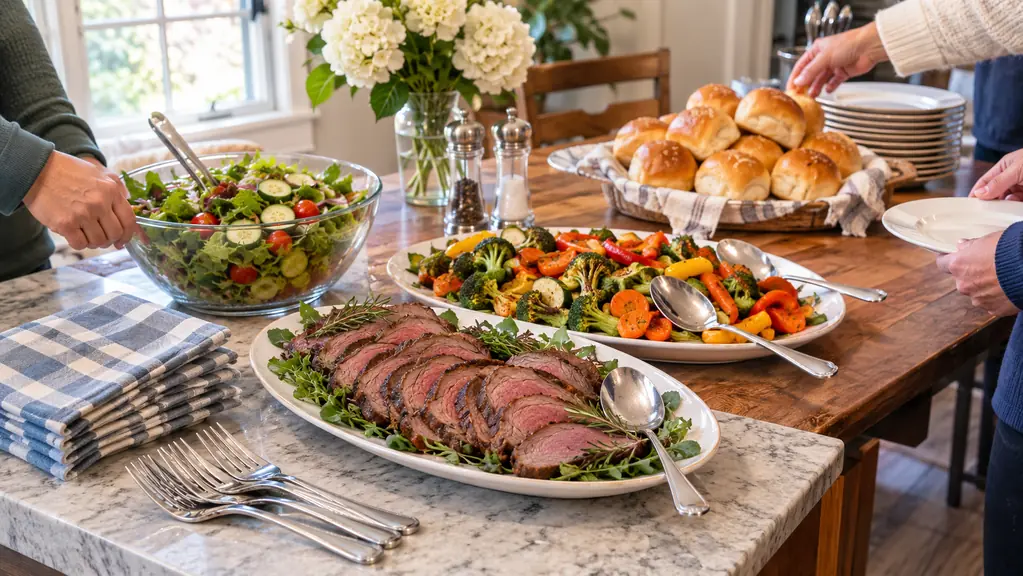
The order of a buffet line is a traffic decision, not a decoration decision. Plates first, always, stacked at the front where a guest cannot miss them. Then the main dish, then the starch, then the vegetables, then the bread, then the small cold things at the end. Napkins and forks go at the very end, or rolled into the napkins at the beginning if you have a grandchild who likes to help. What you do not want is silverware down at the far end with nothing to carry it in, because the first guest in line will stand there with a full plate looking for a fork while nine people wait behind her.
Keep seven or eight dishes on the table. Fewer than that and the meal looks stingy, which matters to me more than it probably should. More than eight and the line stalls while people decide. If you have made twelve things, that is wonderful, and four of them should stay in the kitchen, covered and warm, ready to come out when the first platter empties. A hostess who is still carrying dishes while her family eats has planned a restaurant, not a dinner.
Do a dry run if the meal matters. Fifteen minutes before you call anyone, walk the line yourself with an empty plate and see whether your hand can reach every dish without setting the plate down. If you have to put it down, so will they, and that means the table is too crowded. It also means somebody is going to rest a serving spoon on the good tablecloth before the night is out.
Step 4: Hold the temperature without turning dinner into a fire drill
Buffet food goes cold in about twenty minutes in an ordinary house, and there is no way around that except planning. Warm the platters before the food goes onto them. Mine go into a low oven while the roast rests, and stoneware holds that heat long enough to be worth the trouble. Not a hot oven, just warm, and only for a few minutes. If you would not rest your hand on it comfortably, it is too warm for the platter and too warm for the food going onto it.
Serve the hot dishes in the oven safe pieces and keep the cold ones cold. In July I set the salad platter down into a larger pan with a little ice in it, which sounds fussy and takes ten seconds. Nothing on a buffet stays chilled forever, but a salad that has been sitting out since church let out is not a salad anymore, and everybody at the table knows it.
Do not stack the platters to make room, either. Stoneware is strong, and this glaze is made to take a scratch, but a stack of heavy dishes in a small kitchen is a chip waiting to happen. My rule is that the extras live on the counter on a folded towel, never in a stack. I have had this set for years with not one chip, and I credit the towel more than my own carefulness.
Step 5: Refill early and in small amounts, and the line never stalls
The last step is what separates a good buffet from a tired one, and it is simply this. Refill before the dish is empty, not after. A half full platter looks like plenty. A platter with three green beans rolling around the bottom looks like the meal is over, even when there is a full dish sitting in the kitchen ten feet away.
This is where the second MORA platter earns its keep. When the 13.5 inch is down to the last few slices, I swap it for the 11.8 inch with a fresh portion on it and send the big one to the sink. It takes fifteen seconds, the table never looks picked over, and the dishwasher load at the end of the night is two platters instead of five. Walt notices that part more than he notices the garnish.
Do it while people are still eating, not during a lull. The second wave always sits down later than you think, and they should find the table looking the way the first wave found it.
What Else Helps
Two small things make a line work better than any dish you cook. The first is plates at both ends of the counter instead of one stack, because people will walk around a table to keep from reaching over a person. The second is a glass of water at every place, poured before anyone sits down, so the meal does not stop twice for drinks.
Then wash the platters the same night. Stoneware that goes into the dishwasher before you sit down to your own plate is stoneware you will still be using at Christmas. Mine have been through more cycles than I can count and the glaze still looks the way it did the first month.
And teach the children the line, the same as you teach them the fork on the left and the knife blade facing the plate. My grandkids can carry a plate down a buffet without a spill now, and they know to leave the serving spoon resting on the platter instead of on the cloth. Manners at a buffet are mostly just paying attention to the person behind you.
Start with the two sizes you will use every week
A 13.5 inch oval for the main dish, an 11.8 inch oval for the sides, both oven safe and dishwasher safe. It is the set I reach for on a Sunday and again at Christmas.
Amazon Check today's price on Amazon →