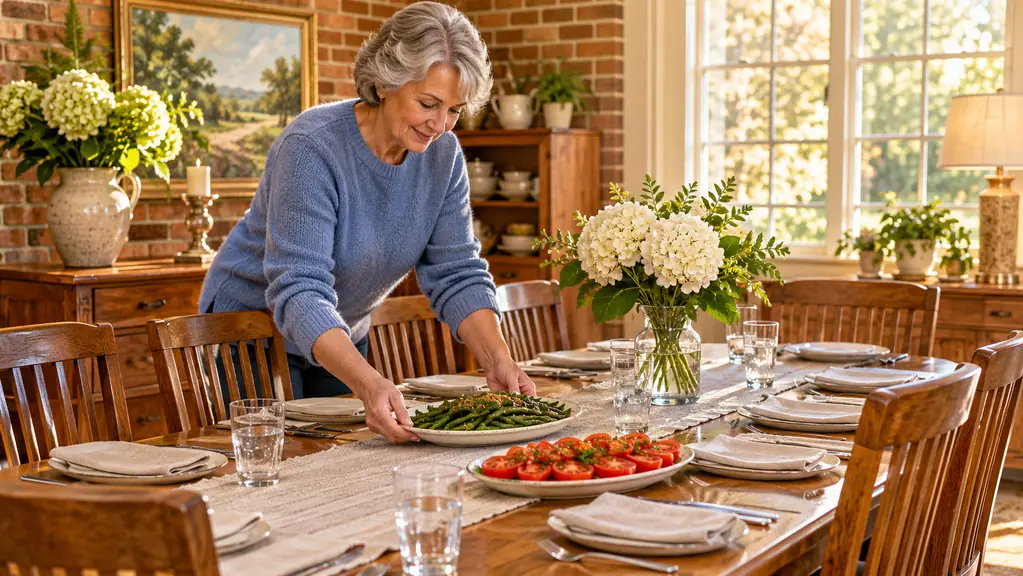
Sunday dinner at our house means eight around the oak table and two more squeezed in at the card table by the window, and for years it meant three mismatched baking dishes doing the work of serving platters. I would carry a chipped casserole of green beans out of the kitchen and set it down next to a pie plate of sliced tomatoes, and something about the arrangement made a family dinner look like a church potluck. I taught home economics for twenty-nine years before I retired, and I have set a great many tables, so I know the difference between a table that looks cared for and one that looks scavenged. Last September I moved those old dishes to the back of the hutch and put a set of MORA ceramic oval platters into service instead.
Since then the platters have been on my table at nearly every Sunday dinner, at Thanksgiving for fourteen, and at Christmas for twelve. That is somewhere north of forty meals, most of them involving gravy, cranberry sauce, and at least one grandchild who ladles with real enthusiasm. What follows is what a full season of ordinary use looks like from somebody who has washed more dishes than she can count and has firm opinions about which ones deserve the cabinet space.
The Quick Verdict
Two well-sized oval platters that go from oven to table to dishwasher without fuss. The pair covers most of a family dinner, though a table serving six or more dishes will still want a third vessel.
Amazon Check Today's Price →Two platters that do the work of three mismatched dishes
The large one is 13.5 inches long and the smaller is 11.8, and both are oven safe and dishwasher safe. That means the green beans and the rolls can leave the kitchen at the same time, which my old baking dishes never managed.
Amazon Check Today's Price on Amazon →How I've Used It
I stopped saving the platters for holidays in the first week, mostly because I wanted to know whether they would hold up to an ordinary Tuesday. The large one went to the table with a pork loin and roasted carrots, then with a whole roasted chicken and potatoes, then with corn on the cob on the Fourth of July. The smaller one carries sliced tomatoes and cucumbers from the garden, a pile of rolls, or the deviled eggs my daughter brings. Neither has ever felt like it was at its limit, even on the evenings when I piled them past what I should have.
The shape is the part that surprised me. An oval platter travels down a table better than a round bowl does, because it takes up less width where elbows are already crowded and still gives everybody a clear line to the food. At a table of ten with both leaves in, that matters more than anything printed on the box. My youngest granddaughter can reach the beans now without asking anyone to hand them down, and she is pleased about it in a way that has nothing to do with green beans.
Walt handles the dishes after Sunday dinner, and he is not a gentle man with a dishcloth. The platters go straight into the dishwasher with the plates and come out clean. On the nights I wash by hand because there are only four of us, everything wipes off with a soapy cloth, including dried cranberry sauce, which I mention because that is the test that separates a glazed dish from a porous one. I have had porous dishes. You can scrub them for five minutes and still feel the stain.
One more thing about how I use them: they have replaced two of my mixing bowls for serving, not because they are better bowls but because they are the right depth. I dress a salad in the large platter, toss it with two forks, and carry it straight to the table. One less vessel to wash at the end of the night, and at my age I count every dish I do not have to touch.
What the Two Sizes Actually Hold
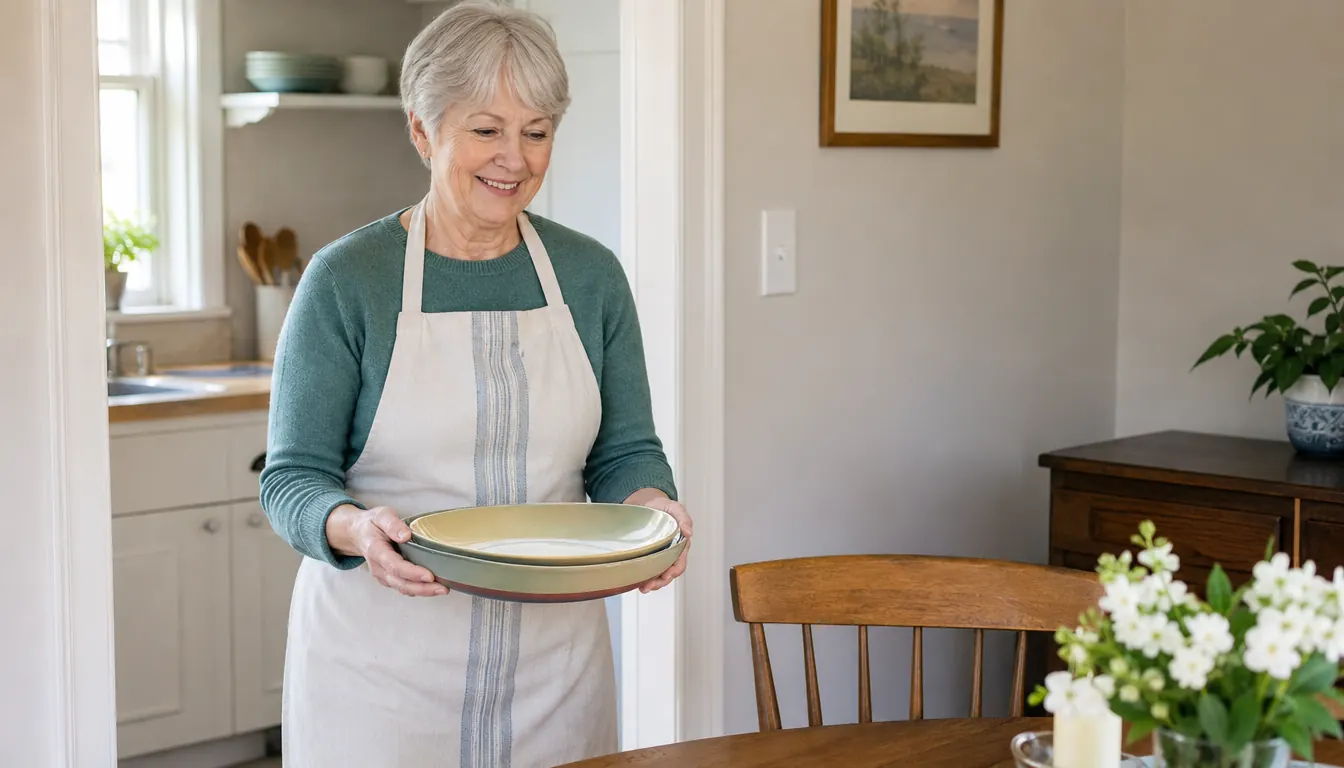
The set gives you two dishes. The large one is 13.5 inches long and holds 55 ounces, and the smaller is 11.8 inches long and holds 35 ounces. Both stand 2.2 inches high at the rim, which is the detail I care about most and the one that almost never gets mentioned in a listing.
In plain kitchen terms, 55 ounces is a little under seven cups and 35 ounces is about four and a third. That means the large platter holds a full green bean casserole with room to spare, or a dozen deviled eggs, or enough sliced ham for a second round. The small one is right for a family-of-four amount of salad or a batch of rolls. If you are feeding more than about ten people, you will want both working at once, and on Thanksgiving I still had a third dish on the counter.
The two inch height is what keeps me coming back. A deep bowl hides what is in it from anyone sitting across the table, and it makes reaching the bottom awkward without standing up. A low oval lets a person see the food and take a sensible portion. I have served green beans out of the large platter to a table of twelve, and not one person had to lift it to get to the last of them.
If you are trying to picture it against what you already own, the large platter is roughly the footprint of a dinner plate laid on its side and stretched, and the small one is closer to a salad plate in width. Both are noticeably longer than they are wide, which is the whole reason they work on a crowded table.
The Glaze After a Season of Suppers
MORA makes two claims about the finish that are worth repeating and then testing. The first is a crystallized glossy glaze that they say resists scratches under 1000 grams of pressure. The second is their Paladin Clay, which they describe as 20 percent stronger than what competitors use. I have no laboratory and no way to verify either number, so I will tell you what the company says and then tell you what I actually saw.
What I saw was forty some dinners and no chips, no cracks, and no crazing, which is the fine spiderweb of lines that shows up on cheap stoneware after a few trips through hot water. I stirred dressing in the large platter with a metal spoon more than once, which I do not recommend and will not do again, and I cannot find the mark. The finish still looks like it did the day I unwrapped it. My old baking dishes had dull grey stripes from serving spoons by the end of their second year.
Where I would be careful is the rim. It is ceramic, and ceramic does not forgive a drop onto a brick floor. I carry these with two hands when they are full, a habit I picked up after breaking a mixing bowl on the patio steps last spring. That is not a flaw in the platters. It is the nature of the material, and any stoneware you buy will behave the same way.
I also want to be fair about what a season can and cannot prove. A year of Sunday dinners tells you a glaze is not going to craze in the first month. It does not tell you what year five looks like. What I can say is that the wear so far is zero, and that the two pieces still match each other, which is more than I can say for the set of plates I bought in 2019.
Heat, the Oven, and the Dishwasher
The listing says oven safe and dishwasher safe, and I have used them both ways. The large platter goes into a low oven to keep rolls warm while the rest of the meal comes together, and it has never complained. I have not run either one under the broiler, because the listing does not promise that and I am not willing to find out the hard way with fourteen people due at noon.
The dishwasher has been the real test. Forty meals means forty washings, and they have been through the heated dry cycle more times than I can count. There is no clouding, no chalky film, and no fading. My everyday plates, which cost less and came from a company I will not name, went cloudy in about a year of the same treatment. That is the kind of thing you only notice when the light hits them at the wrong angle, and then you cannot stop noticing it.
One practical note for anybody setting a holiday table: these hold heat better than a thin glass dish does. At Christmas I pulled the large one out of the oven with the sweet potatoes in it and set it on the table twenty minutes before we sat down, and the second helping was still warm. That is not a feature the company advertises, but it is the kind of thing that makes a difference when the meal runs long and the mashed potatoes are already cool.
The one caution I will pass along is about temperature changes. I let a hot platter sit on a folded towel on the counter for a few minutes before it goes anywhere near a cool surface or a sink of water. Stoneware and sudden cold do not get along, and I would rather be tedious about it than lose a piece I use every week.
How They Look on the Table
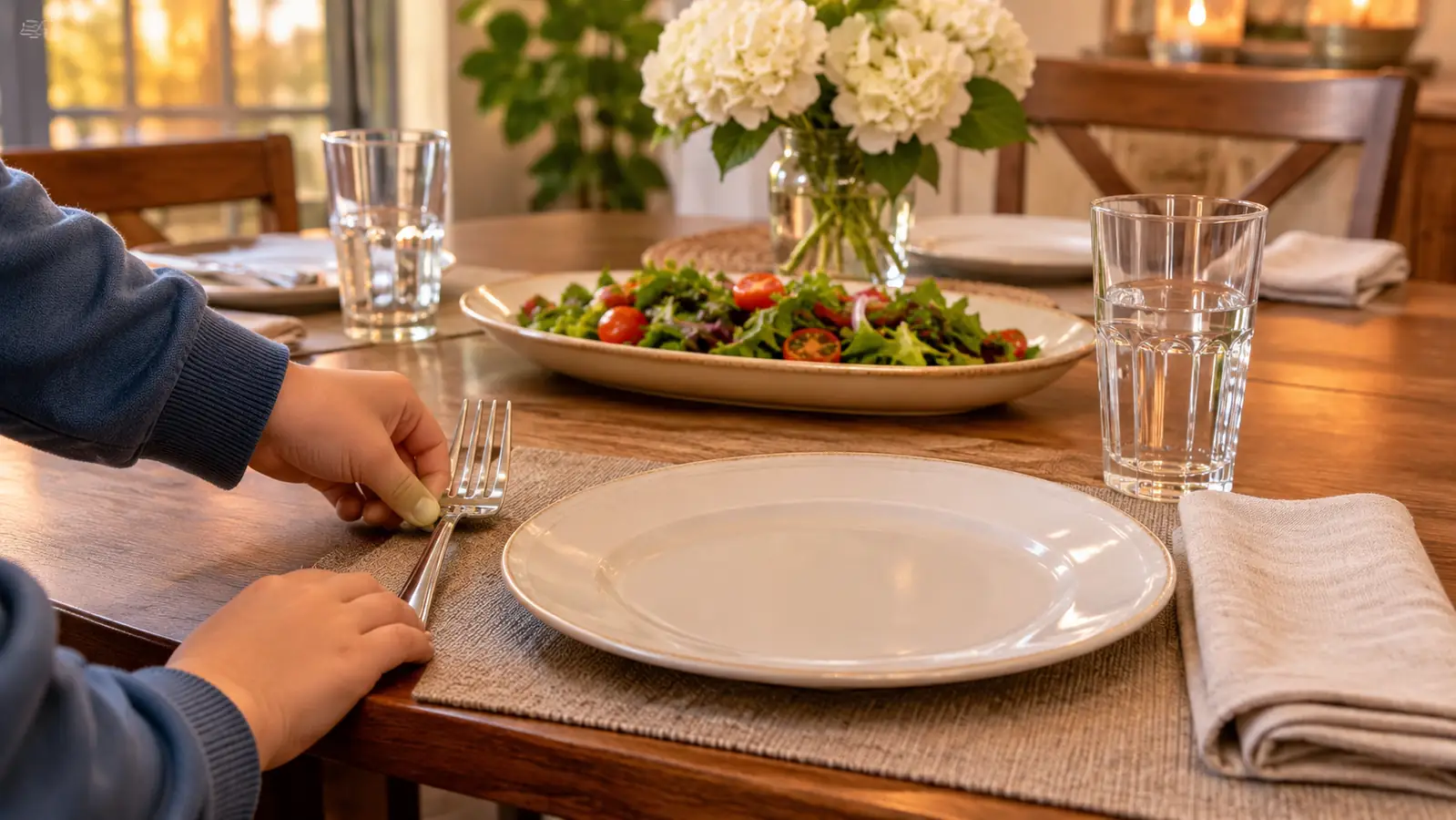
The style is plain and quiet, solid rather than patterned, with an oval shape that sits low on the table. That is exactly what I want in a serving piece. My china has a small floral border, and a busy platter beside it would fight for attention. These do not. They let the food be the bright thing on the table, which is the whole point of a serving dish.
They also read as everyday rather than precious, which is why I actually use them. I own a good china platter that lives in the hutch because I am afraid of it. These get used on a Wednesday. A serving piece that stays in the cabinet is not a serving piece, it is an ornament, and I have enough ornaments.
What I Liked
- Two sizes that cover most of a family dinner without crowding the table
- Low oval profile lets people reach the food instead of passing dishes hand to hand
- Oven safe and dishwasher safe, with no clouding after a season of washings
- Glaze has held up to serving spoons with no scratch I can find
- Holds heat longer than thin glass, which helps when the meal runs long
Where It Falls Short
- Ceramic will not survive a drop onto a hard floor, and the rims are exposed
- Only two sizes, so a table serving six or more dishes still needs a third vessel
- The 13.5 inch platter takes real cabinet room and does not stack with round plates
- Costs more than basic stoneware, and the difference shows up over years rather than weeks
Forty some dinners in, there is not a chip, not a crack, and not one scratch I can find, even where I stirred dressing with a metal spoon.
Who This Is For
This set is for the person who does the cooking and the serving and the washing, and who is tired of hauling out three mismatched dishes for a meal that deserves better. If you host family dinner more than once a month, or if the holidays happen at your house, you will use both sizes and you will be glad of them. The large one earns its space at Thanksgiving. The small one earns it on a Tuesday.
It is also for the cook who wants serving pieces that go from the oven to the table without a transfer, because that is one less dish to wash and one less chance to burn a wrist on the way. And it is for anybody who has watched a pretty platter sit unused in a cabinet for six years and decided not to buy another one like it.
If you set a table for grandchildren and want them to learn how a proper table looks, these help. A plain oval with food in it and a fork on the left is a lesson all by itself, and MORA made a piece quiet enough not to distract from it.
Who Should Skip It
If you already own platters you love and use, you do not need these. If you serve four people and never more, one platter would do and a set of two is more cabinet space than you want to surrender. And if you have a tile kitchen floor and a habit of carrying dishes one handed, think carefully, because these are ceramic and the edges are honest about it.
Finally, if what you actually need is a covered casserole for potlucks, this is not that. These are open serving platters meant for a table, not for a back seat. Buy the right tool for the job you actually have, even if the wrong one is prettier.
If your table still looks like a potluck, start with these two
The 13.5 inch platter does the holiday work and the 11.8 inch one does the Tuesday work. Both go from oven to table to dishwasher, and after a full season of Sunday dinners mine still look new.
Amazon Check Today's Price on Amazon →