Glass serving bowls have been on my table since 1983. I still have the deep one I bought with wedding-gift money, and it still comes out for the layered salad at Thanksgiving. So when I tell you that the MORA ceramic oval platters have taken over most of the serving in this house, understand that I did not fall out of love with glass. I got tired of one thing glass does that no amount of careful handling fixes.
Here is the short answer, and then I will show my work. Glass wins when the dish itself is the show: a trifle, a layered salad, a bowl of fruit on the counter. MORA wins when the table is the show and the food has to go into the oven first. The MORA set is two oval stoneware platters, 13.5 inches and 11.8 inches long, holding 55 and 35 ounces. They stand 2.2 inches high at the rim, and they are oven safe and dishwasher safe. That is the whole of it, and it settles most of the question before we ever get to the table.
| MORA Ceramic Oval Platters | Glass Serving Bowls | |
|---|---|---|
| Look on a set table | Opaque stoneware, so the dish reads as part of the setting | Transparent, so the food decorates and the dish mostly disappears |
| Layered salads and trifle | The layers stay hidden until someone spoons in | Every band of color shows from the side, which is the point of the dish |
| Feeding a crowd from one dish | 55 ounces in the large platter, plenty for a family passing dish | Deep glass holds more, and high sides keep a tossed salad in |
| Oven to table | Oven safe, so it warms in the oven and goes straight to the table | Only some glass pieces are oven safe, and I have never fully trusted the ones that are |
| Holding up over years | Stoneware with a crystallized glaze rated to resist scratches under 1000 grams of pressure | Glass scratches, clouds, and one hard knock on a stone counter finishes it |
| Seeing when a dish needs refilling | You lift the spoon and look | You see the level from across the room |
| Stacking in the cabinet | Both pieces are 2.2 inches high, so they stack flat | A deep bowl takes the height of a dinner plate each |
| Passing a full dish at the table | Takes two hands once it is loaded | Also takes two hands once it is loaded |
| Everyday cleanup | Dishwasher safe | Dishwasher safe |
| Best for | Sunday dinner, holidays, anything going into the oven | Salads, fruit, punch, anything you want seen |
Where MORA Wins
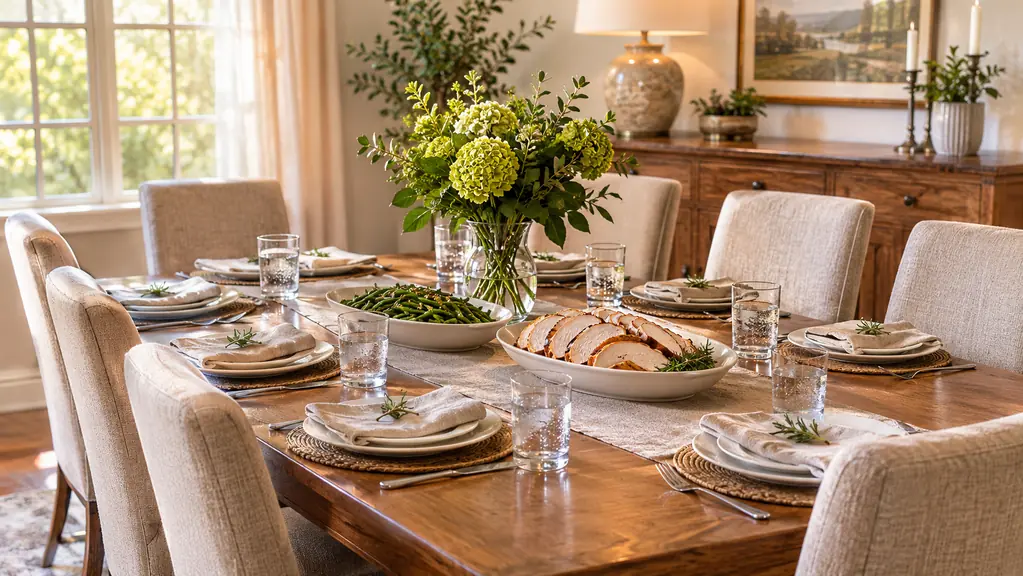
An oval platter does something a round bowl cannot, and it is not a small thing. A round bowl in the middle of a table says help yourself from the center. An oval platter says this is a course, and it says it without a word. The 13.5 inch piece runs the long way down my oak table and still leaves room on both sides for the salt, the butter dish, and somebody's water glass. Because both pieces sit low, only 2.2 inches at the rim, you can see the face of the person across from you while the food is still out. Half the pleasure of a Sunday dinner is the looking across, and a tall stack of dishware takes that away.
The second thing MORA has going for it is heat. I warm the cornbread dressing in the 11.8 inch piece and carry it to the table still hot, and I do not have to move it into another dish first. Ceramic holds that warmth a good while, so the second helping is still warm when it reaches the plate. The stoneware is made from what the listing calls Paladin Clay, which they say is 20 percent stronger than the clay their competitors use, and the glaze is a crystallized glossy glaze rated to resist scratches under 1000 grams of pressure. I cannot check 1000 grams on a kitchen scale. I can tell you that after a year of metal serving spoons, I cannot feel a scratch on either platter with a fingernail.
Where Glass Serving Bowls Win
Now the other side, because glass earned its place a long time ago. A glass bowl is transparent, and transparency is a real serving advantage when the dish was built to be seen. A layered salad in glass shows the green, the red, the white, and the dressing in bands, and people notice before they taste. A trifle in glass is the dessert and the decoration at once. Ceramic hides all of that behind an opaque wall. If your holiday table leans on those layered dishes, you already know exactly what I am describing, and no platter is going to replace it.
Glass also holds more for its footprint. A deep glass bowl with high sides can toss a salad for fourteen people without dressing landing on the tablecloth, and the sides keep the leaves in while the bowl goes around the table. On a buffet, you can see from the end of the line how much is left, so nobody scrapes the bottom and nobody refills a dish that was still two thirds full. I have used that to my advantage for forty years and I am not going to pretend otherwise just because I like the new pieces.
If the table is the part you care about, this is the pair I would start with
Two oval platters, 13.5 and 11.8 inches, holding 55 and 35 ounces. Oven safe, dishwasher safe, and low enough that nobody has to lean around them to see you across the table.
Amazon Check Today's Price on Amazon →What the MORA Set Actually Is
Two pieces, not a whole set, and I think that is the right call for a serving collection. The large platter is 13.5 inches long and holds 55 ounces. The smaller is 11.8 inches and holds 35 ounces. Both are oval, both are solid in pattern, and the style is what the listing calls Scandinavian, which in plain terms means clean lines and no fussy border to date it. The measured width and height on the large piece is 13.5 inches by 2.2 inches. That low profile is the detail I would point to first if you were standing in my kitchen, because it is what makes the platters work on a crowded holiday table where a deep bowl simply would not.
They are oven safe and dishwasher safe, and I have used both facts more than I expected to. The platters go into the oven to warm, come out with a thick pad, and go straight onto the table. When dinner is over they go into the dishwasher with the everyday plates, and I do not hand wash them unless the oven has baked something onto the rim. The listing mentions a crystallized glossy glaze and a clay they describe as stronger than competitors, and I take any manufacturer claim with a grain of salt. Still, the pieces have not chipped, crazed, or dulled in a year of steady use, and that is the part I can vouch for.
How They Hold Up Over a Year of Sundays
I have served on these platters most Sundays since they arrived, plus Thanksgiving and Christmas, which in this house means twelve to fourteen people and a card table added at the end of the room. The large platter has carried a turkey breast, a ham, a pile of sliced tomatoes, and once, when the oven was full, an entire green bean casserole. The smaller one handles the rolls, the cranberry sauce, and the pickles and olives at the holidays. Nothing has stained through the glaze, including the cranberry sauce, which is the true test in this family.
The honest wear is on the underside, where the unglazed foot ring meets the table. Mine has a few faint marks from being slid across the oak instead of lifted, and that is my fault, not the platter's. A glass bowl would show the same sliding marks more, and it would show them on the sides where everyone can see. Where ceramic does lose is a hard knock against a stone counter or a cast iron skillet. Ceramic chips. It does not shatter into the sink the way glass can on a bad night, but a chip on the rim is permanent, so I lift these now instead of sliding them.
One more note for the holiday cooks. I put both platters in a warm oven, not a hot one, while the rolls finish, and I have never had a problem. I would not run either of them from a hot oven into a sink of cold dishwater, and I would not expect any stoneware to enjoy that. Treated like a dish and not like a hockey puck, they should outlast the table they sit on.
After a year of metal serving spoons, I cannot feel a scratch on either platter with a fingernail.
The Table Setting Question Nobody Asks
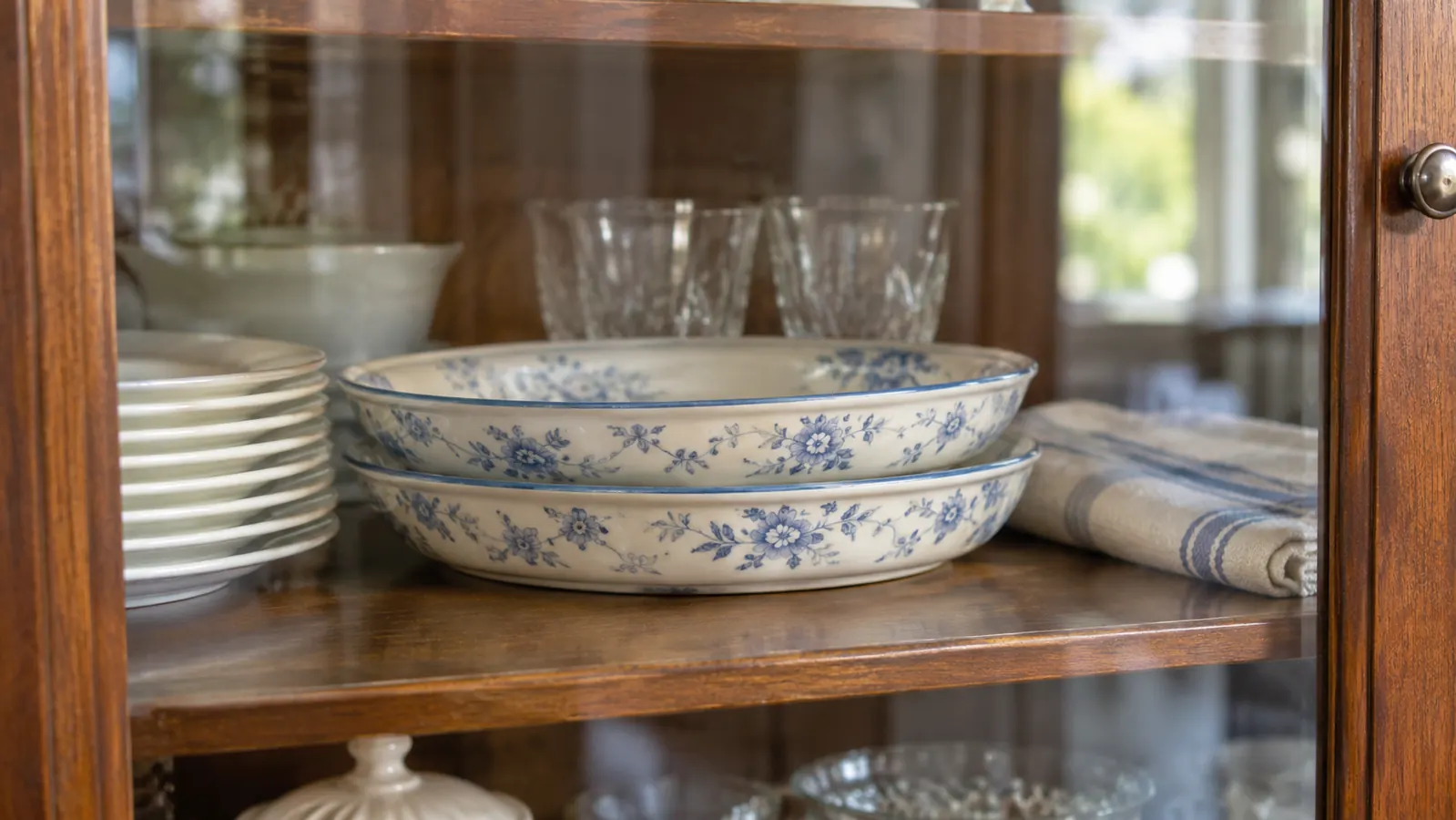
Here is the question I wish more people asked before buying serving pieces: what does the dish do to the table when it is empty and waiting? My glass bowls sit out before dinner and look like nothing at all, which is perfectly fine on a Tuesday. On Christmas, with the good cloth down and the hutch candles lit, an empty glass bowl on the sideboard reads a little bare. The MORA platters read as part of the setting. That is the whole argument, and it is a matter of taste rather than a matter of quality.
I taught table setting for thirty one years, and the rule I kept coming back to is that a table reads as a whole before it reads as pieces. Opaque dishes hold their visual weight, so a stack of them on a sideboard looks intentional. Clear dishes recede, which is wonderful when the food is the point and a little thin when the room is dressed up. Neither is wrong. You just have to decide which table you are setting and then buy the dishes that belong on it.
Two Ways to Set the Same Table
If you go all glass, set the table around the transparency and let the food do the decorating. Use one tall glass bowl for a layered salad and let it stand at the center. Put cut fruit in a smaller one off to the side. Keep the linens plain so the colors in the food carry the table, and skip a centerpiece that competes with them. I have set that table many times and it is fresh and pretty, especially in summer when everything is cold and bright.
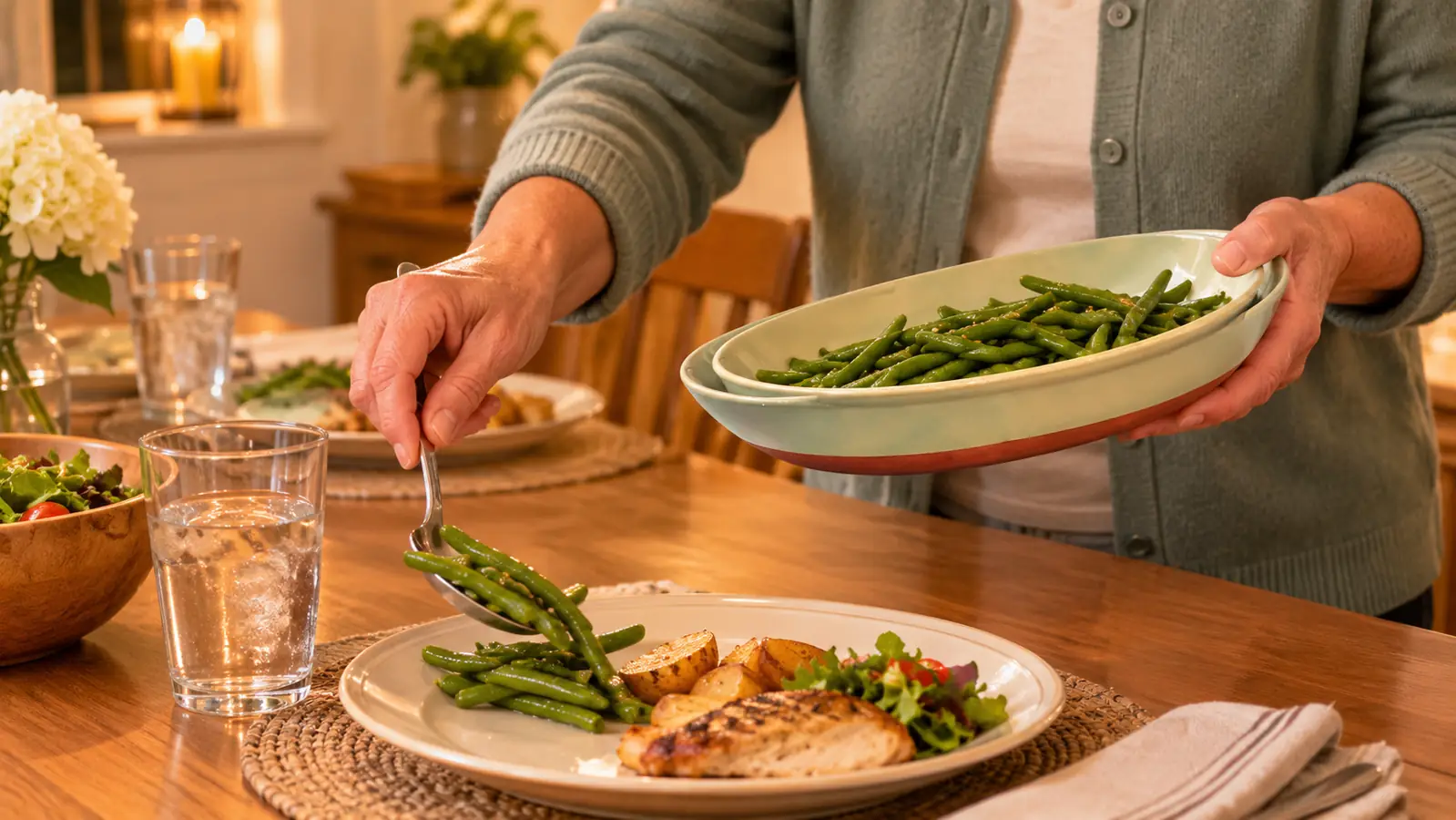
If you go with the MORA platters, build the table in ovals and use the low profile. Put the 13.5 inch platter in the center with the meat or the main dish, and set the 11.8 inch piece near the end with the vegetables or the rolls. Because they are only 2.2 inches high, you can put a short centerpiece beside them without a wall of dishware between you and your son in law. Then serve out of them and skip the transfer step entirely, which saves a stack of dirty dishes and a walk back to the kitchen.
Who Should Buy Which
Buy the glass bowls if most of your serving is cold and meant to be seen: layered salads, trifle, fruit, a big tossed salad for a crowd, punch at a shower. Buy them if you already own them and they are still doing the job, which is true for two of mine. Buy them if you would rather not lift a heavy piece down from a high shelf.
Buy the MORA set if you serve hot food and you are tired of moving it from the oven to a serving dish and then to the table. Buy it if your holiday table is crowded and you need low pieces that do not block the view. Buy it if you want two pieces that look like they were chosen together rather than pulled from the back of a cabinet. And buy it if you are the one who ends up washing up, because these go in the dishwasher with everything else.
The pair that has carried every Sunday dinner in this house for a year
Two oval stoneware platters, 13.5 and 11.8 inches, holding 55 and 35 ounces. Oven safe, dishwasher safe, and low enough to see over.
Amazon Check Today's Price on Amazon →