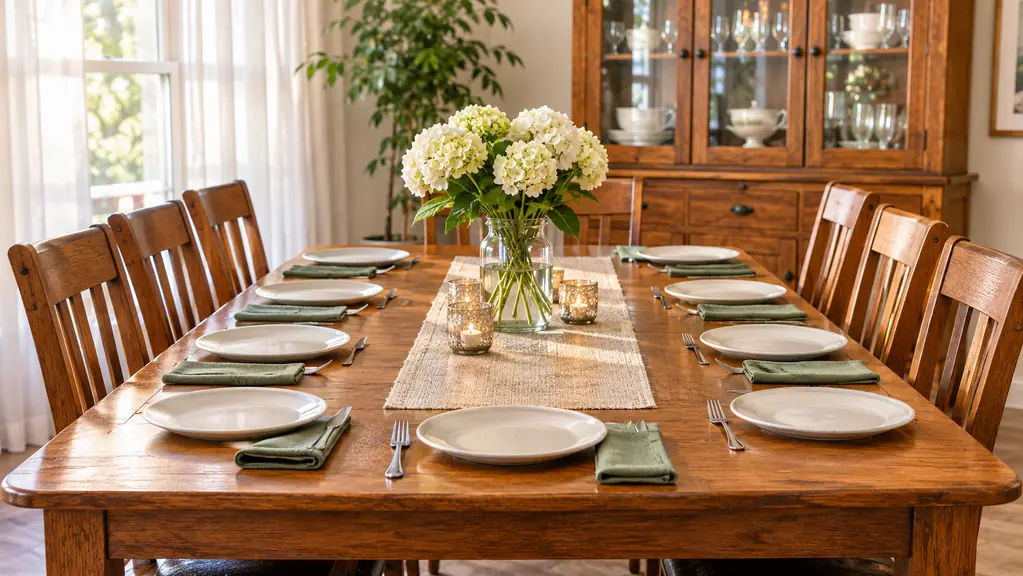
Sunday dinner at my house is at one o'clock, and by twenty till, the table is set except for the napkins. I held onto paper far longer than I should have. They were easy, I told myself, and nobody ever complained. Then one Thanksgiving my daughter folded cloth napkins at every place, and my youngest granddaughter spent the better part of the meal smoothing hers flat and folding it again. Children notice when a table is taken seriously. That is most of the argument for cloth, and it is a good one.
Folding a napkin is not a craft project. There are four folds worth knowing, and the plainest of them will handle nearly every meal you ever serve. What matters more is having enough napkins, clean and pressed, so you are not doing arithmetic in your head on a Saturday night. I keep a set of twelve RUVANTI cloth napkins in the sideboard drawer, eighteen inches square in a cotton enrich weave, and they have covered every Sunday dinner and every holiday since they arrived. Twelve is the number that lets me feed eight with both leaves in and still have a clean stack for the card table at Christmas.
Twelve Napkins, So You Stop Counting on Saturday Night
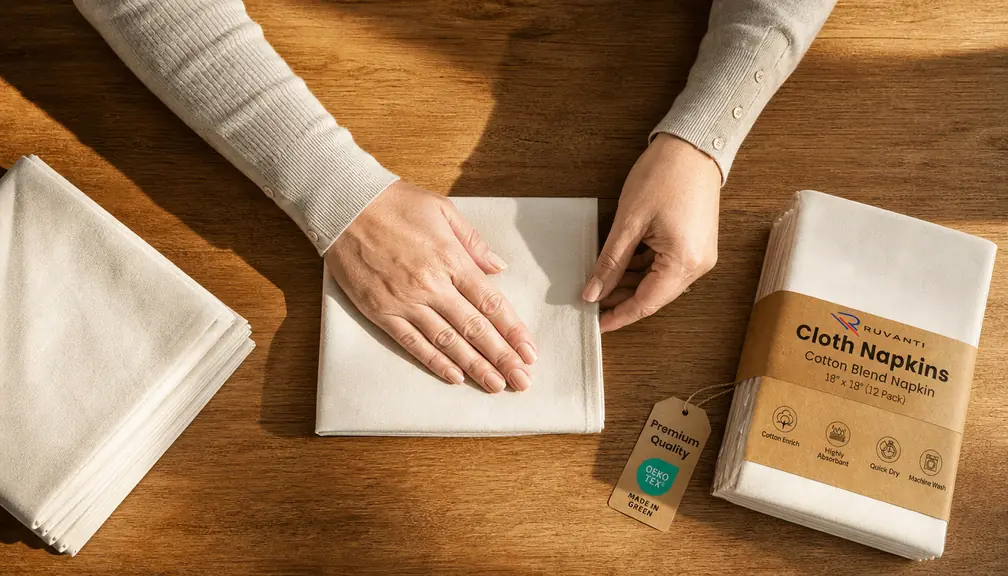
RUVANTI's set of twelve, 18 by 18 inches, cotton enrich and machine washable. Enough for Sunday dinner with both leaves in, with a clean stack left over for the holiday card table.
Amazon Check Today's Price on Amazon →A Word on the Napkin Itself
Before any folding, a word about choosing the napkin, because a fold can only do so much with the wrong one. Eighteen inches square is the size I recommend. Smaller than that and you are really holding a cocktail napkin, pleasant for drinks on the porch but not something a guest can properly put in their lap. Larger than eighteen gets awkward once it is sitting on a dinner plate.
A solid weave in a square cut is the practical choice, and it is why these work at my table. A solid pattern mixes with whatever china you already own, whether that is your wedding pattern or the everyday stoneware, and you never have to match a print to a tablecloth. The full set of twelve weighs a little over a pound together, which tells you the cotton enrich weave has some substance to it without being stiff enough to fight you at the ironing board.
Buy one set, learn two folds, and live with them for a season before you buy anything else. That advice has never once steered a young hostess wrong, and I have given it to a great many of them.
Step 1: Start With a Clean, Pressed Napkin
A fold only holds if the fabric has some body to it. A napkin pulled warm from the dryer and given a quick shake will slump ten minutes into the meal, and then it looks like you forgot about it. So the first step is not folding at all. It is getting the napkin flat and crisp before it ever reaches the table.
The RUVANTI napkins wash in the machine on a normal cycle in normal water alongside your light colors, which is the only laundry instruction I have ever wanted from anything. I run them with the kitchen towels on Tuesday, dry them on low, and pull them out while they are still a touch damp. Then I press them flat with a warm iron. A stack of twelve takes about two minutes once the iron is hot. The pressing is what makes the creases sharp and keeps a fold standing until the coffee comes out.
Two notes from long experience. Fold them the day you press them, because a stack that sits in the drawer for a week gets a tired, soft look to it. And keep a small spray bottle of water by the board. One spritz and a press will take out a crease that has set in the wrong place, and you will not have to rewash a napkin over it. The eighteen inch square is also generous enough to actually cover a lap, which is the whole point of a dinner napkin and something the small cocktail size will never do.
Step 2: The Square Fold That Handles Ordinary Sundays
This is the fold I use most weeks. It is quick, it stacks flat in the drawer, and it looks like you meant it.
Lay the napkin flat on the table and smooth it with the flat of your hand. Fold it in half, edge to edge, matching the corners as closely as you can. Fold it in half again in the same direction. You now have a square about nine inches across, then about four and a half. Press each crease with the heel of your hand rather than your fingertips, because fingers leave dents and dents show once a plate is set on top of them.
Set it to the left of the forks, or on the plate if you are serving a first course and need the room. Do the whole stack at once, assembly line fashion. Twelve napkins take four minutes and the repetition is restful. This is also the fold I hand to a grandchild who wants to help, because it is nearly impossible to get wrong and children like a job they can actually finish.
Step 3: The Triangle Fold When the Table Should Look Dressed
A triangle reads as more formal than a square, and it costs you one extra second.
Lay the napkin flat. Bring one corner to the opposite corner so you have a large triangle, then bring the two sharp corners together and fold once more. What you are left with is a smaller triangle, a long folded edge and a single point. Set the point toward the diner or toward the center of the table, whichever suits your plates, and keep it the same at every place. Consistency is what guests read as care.
A triangle tucks neatly under a fork when the table is crowded, and it looks deliberate on a plate that already has a salad on it. I use this fold for Easter and for the anniversary dinner my husband and I have every June, when there are only two of us and I still want the table to feel like an occasion rather than a Tuesday.
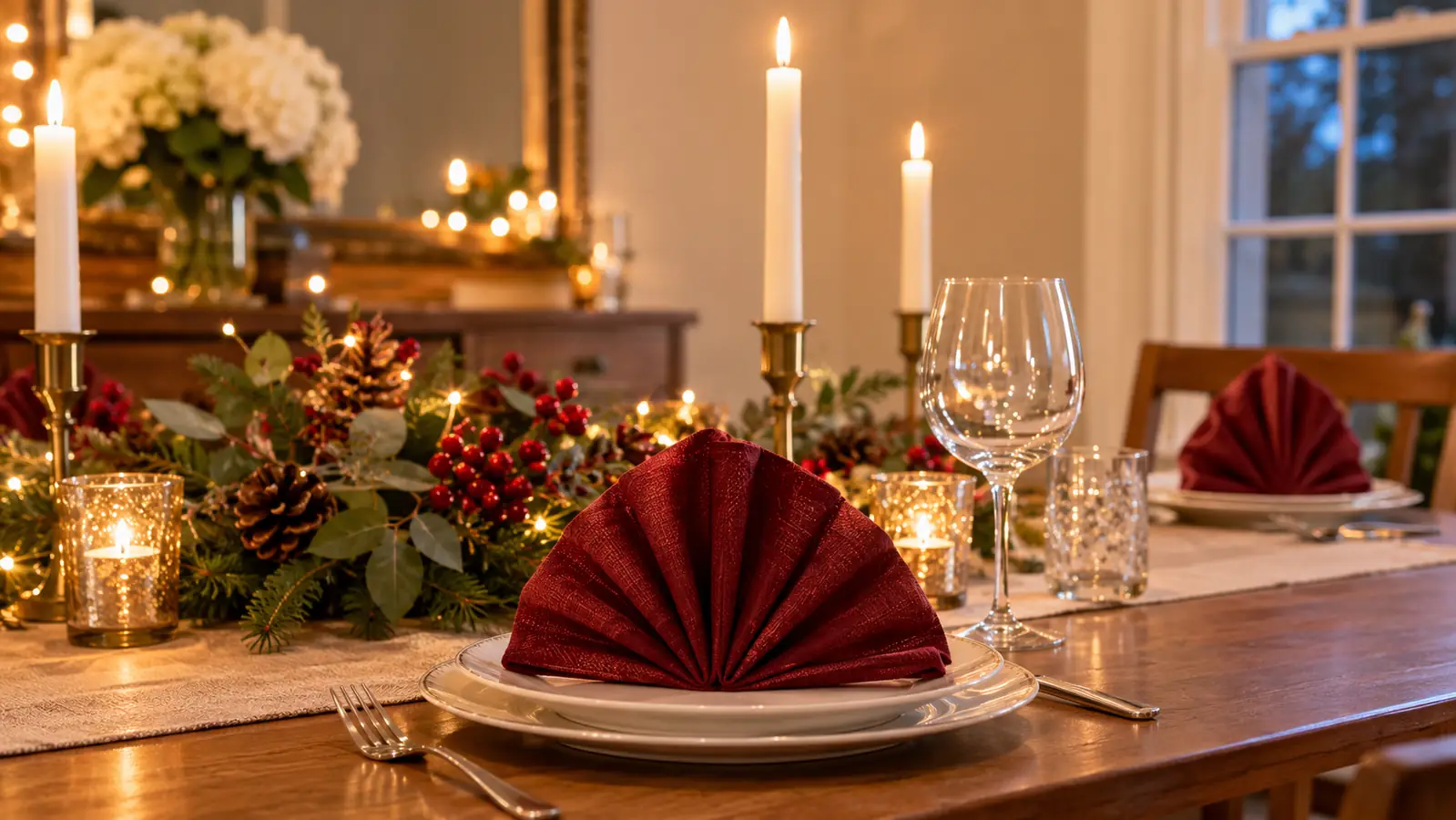
Step 4: The Standing Fan Fold for the Holiday Table
This is the one that draws compliments, and it is the one people assume is difficult. It is not difficult. It is fiddly, and fiddly is perfectly fine when you are only doing it once a year.
Lay the napkin flat and pleat it from one edge, accordion style, about an inch per pleat, all the way across. Gather the pleats together with one hand, pinch the whole thing at the center, and fan both ends out. Stand it in a glass, tuck it into a napkin ring, or lay it across the plate with the fan opening toward the diner. Practice once on a kitchen towel before you commit to fourteen of them on a holiday morning.
Do these the morning of, not the night before. Pinched pleats relax overnight, and a fan that has gone slack reads as a mistake rather than a flourish. When we sit twelve to fourteen at Thanksgiving the way we usually do, I fold them after breakfast, before the turkey becomes my whole afternoon.
An eighteen inch square folds to nine, then to four and a half, and four and a half inches sits on a dinner plate without hanging over the edge. That is the only arithmetic in table setting that has ever mattered to me.
Step 5: Put It Where It Belongs and Finish the Setting
Where the napkin goes tells your guests what kind of meal this is. Left of the forks is the old standard and always the safe choice. On the plate says sit down, we are having dinner. In a glass says we are celebrating something.
While you are standing there, finish the rest of the place. Fork on the left, knife on the right with the blade facing the plate, spoon outside the knife, glass above the knife. I have taught all four grandchildren this, and the youngest still checks the blade direction before she sits down. That is a habit that will outlast me, and it started with a folded napkin and a job she was allowed to do herself.
One more thing, and I mean it kindly. Do not fuss with the table once people are seated. Straighten a napkin that has slid and then leave it alone. A hostess who keeps adjusting things makes her guests feel they are being inspected, and nobody relaxes at a table like that.
What Else Helps
Napkin rings earn their place with the fan fold or a simple roll, and they are also how you tell one guest's napkin from another at a long table. Keep them plain. Anything with a charm on it will end up in a grandchild's pocket before the pie is served.
Have more napkins than you think you need. Twelve covers my eight person table with both leaves in and leaves a clean stack for the card table at Christmas, which is why I settled on that number and stopped buying. When a set is down to four because the rest are in the wash, you will reach for paper and undo the whole thing you were trying to build.
Treat a stain when it happens rather than on Monday. Cold water, a drop of dish soap, blot instead of rubbing, then into the machine with your light colors on the normal cycle. Mine have come back from gravy and cranberry sauce more times than I can count, and not one has needed anything special to get there.
The Week Before
The week before a holiday is when the napkins should get their attention, not the morning of. Count them first. If a set of twelve has drifted down to nine because three are at the bottom of the laundry basket or in a grandson's truck, you want to find that out on Tuesday and not at noon on Thursday.
Wash the whole set, press it, and fold it the same day. Stack them somewhere dry and out of the light, not on a sun porch where they will take on a smell. Then on the morning itself you have one job left, which is the fold you chose, done at a calm pace with a cup of coffee beside you.
The Two Mistakes I See Most
The first is too few napkins, which I have already preached about at some length. The second is folding them too tightly. A napkin pressed into a hard little brick makes a guest work to open it, and there is nothing gracious about watching someone wrestle with their silverware before the blessing. Fold with a light hand and let the napkin keep a little air in it.
And if you are setting a proper table for the first time in a while, do not attempt the fan fold on the day. Learn one fold well, use it at every place, and spend the time you saved on the people coming through the door. That was the lesson I gave thirty years of students, and it is the one I would give you.
Let the Table Be the Easy Part of Sunday
A set of twelve at 18 by 18 inches covers Sunday dinner, the holiday crowd, and the week the washer swallows four of them. Machine washable, and they press flat in about two minutes.
Amazon Check Today's Price on Amazon →